Showing posts with label Unit: Nigeria. Show all posts

Myth-Folklore Unit: Nigerian Folk Stories

Overview. The stories in Folk Stories From Southern Nigeria were collected during the early years of the 20th century by Elphinstone Dayrell, a British colonial official in Ikom, near the Niger River delta. It is a marvelous collection of stories filled with dramatic human adventures, often involving the "kings of Calabar," along with many stories from the world of nature, including origin stories such as why worms live underground, why the elephant's eyes are so small, and why the bat flies only at night. You will read about how fish used to live on the land until a certain fish fell in love with the leopard's wife, and how the sun and the moon used to live here on the earth, too, until a hospitality crisis caused them to move up into the sky. There are stories about familiar animals here, like dogs and cats and chickens, along with distinctively African animals like the elephant and the hippopotamus. So, if you would like to know at least one folktale about a hippo, this is the unit for you!

Language. These stories are told in modern English prose, so the language used should pose no difficulties.

Story Length. These are all single-page stories.

Navigation. You will find the table of contents below, and you can also use this link to see the story posts displayed on two pages total: Nigerian Folk Stories. Click "Older Posts" at the bottom of that page to see the second page.


READING A:
  1. Of the Pretty Stranger Who Killed the King
  2. Why the Bat Flies by Night
  3. The Disobedient Daughter Who Married a Skull
  4. The King Who Married the Cock's Daughter
  5. The Woman, the Ape, and the Child
  6. The Fish and the Leopard's Wife
  7. Why the Worms Live Underneath the Ground
  8. The Elephant and the Tortoise
  9. Why a Hawk Kills Chickens
  10. Why the Sun and the Moon Live in the Sky
  11. Why the Cat Kills Rats
READING B:
  1. The Story of the Lightning and the Thunder
  2. The Bush Cow and the Elephant
  3. The Cock Who Caused a Fight Between Two Towns
  4. The Affair of the Hippopotamus and the Tortoise
  5. Why Dead People are Buried
  6. Of the Fat Woman Who Melted Away
  7. Why the Moon Waxes and Wanes
  8. How the Tortoise Overcame the Elephant and the Hippopotamus
  9. The King and the 'Nsiat Bird
  10. Concerning the Hawk and the Owl
  11. The 'Nsasak Bird and the Odudu Bird
  12. The Election of the King Bird

Nigeria: The Pretty Stranger who Killed the King

You can read about the history of Calabar, the "tourism capital of Nigeria," at Wikipedia. You can also read about the Itu region of Nigeria. This story features the theme of witchcraft, specifically a witch woman named Oyaikan, who is used as a weapon in a political war. You can compare Oyaikan's actions in this story with the story of Judith in Biblical apocrypha: Judith and Holofernes.

[notes by LKG]

This story is part of the Nigeria unit. Story source: Folk Stories From Southern Nigeria by Elphinstone Dayrell (1910).


Of the Pretty Stranger who Killed the King

Mbotu was a very famous king of Old Town, Calabar. He was frequently at war, and was always successful, as he was a most skillful leader. All the prisoners he took were made slaves. He therefore became very rich, but, on the other hand, he had many enemies.

The people of Itu in particular were very angry with him and wanted to kill him, but they were not strong enough to beat Mbotu in a pitched battle, so they had to resort to craft. The Itu people had an old woman who was a witch and could turn herself into whatever she pleased, and when she offered to kill Mbotu, the people were very glad, and promised her plenty of money and cloth if she succeeded in ridding them of their worst enemy.

The witch then turned herself into a young and pretty girl, and having armed herself with a very sharp knife which she concealed in her bosom, she went to Old Town, Calabar, to seek the king.

It happened that when she arrived there was a big play being held in the town, and all the people from the surrounding country had come in to dance and feast. Oyaikan, the witch, went to the play, and walked about so that every one could see her. Directly she appeared the people all marveled at her beauty, and said that she was as beautiful as the setting sun when all the sky was red.

Word was quickly brought to King Mbotu, who, it was well known, was fond of pretty girls, and he sent for her at once, all the people agreeing that she was quite worthy of being the king's wife. When she appeared before him he fancied her so much that he told her he would marry her that very day. Oyaikan was very pleased at this, as she had never expected to get her opportunity so quickly. She therefore prepared a dainty meal for the king into which she placed a strong medicine to make the king sleep, and then went down to the river to wash.

When she had finished, it was getting dark, so she went to the king's compound, carrying her dish on her head, and was at once shown in to the king, who embraced her affectionately. She then offered him the food, which she said, quite truly, she had prepared with her own hands. The king ate the whole dish and immediately began to feel very sleepy, as the medicine was strong and took effect quickly.

They retired to the king's chamber, and the king went to sleep at once. About midnight, when all the town was quiet, Oyaikan drew her knife from her bosom and cut the king's head off. She put the head in a bag and went out very softly, shutting and barring the door behind her. Then she walked through the town without any one observing her, and went straight to Itu, where she placed King Mbotu's head before her own king.

When the people heard that the witch had been successful and that their enemy was dead, there was great rejoicing, and the king of Itu at once made up his mind to attack Old Town, Calabar. He therefore got his fighting men together and took them in canoes by the creeks to Old Town, taking care that no one carried word to Calabar that he was coming.

The morning following the murder of Mbotu his people were rather surprised that he did not appear at his usual time, so his head wife knocked at his door. Not receiving any answer she called the household together, and they broke open the door. When they entered the room they found the king lying dead on his bed covered in blood, but his head was missing.

At this a great shout went up, and the whole town mourned. Although they missed the pretty stranger, they never connected her in their minds with the death of their king, and were quite unsuspicious of any danger and were unprepared for fighting.

In the middle of the mourning, while they were all dancing, crying, and drinking palm wine, the king of Itu with all his soldiers attacked Old Town, taking them quite by surprise, and as their leader was dead, the Calabar people were very soon defeated, and many killed and taken prisoners.

Never marry a stranger, no matter how pretty she may be.


(800 words)


Nigeria: Why the Bat Flies by Night

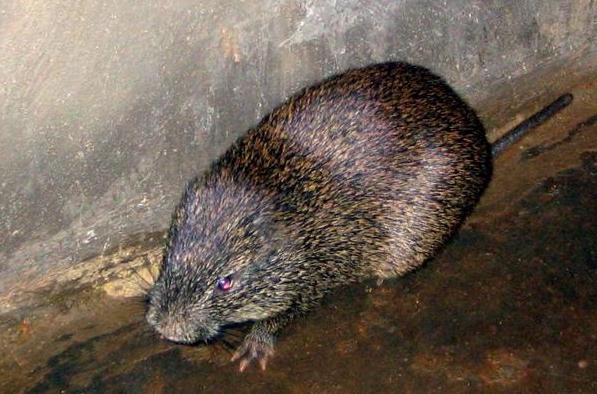
The "bush rat" here is not your usual household rat; these rodents can grow up to two feet long and weigh up to twenty pounds! You can read more about the cane rat (called a bush rat in the story), and also the greater cane rat, at Wikipedia. This type of folktale is called "foolish imitation," and in this case the bat tricks the rat into a fatal act of imitation, although in this story the bat is then punished for his cruel trick.


[notes by LKG]

This story is part of the Nigeria unit. Story source: Folk Stories From Southern Nigeria by Elphinstone Dayrell (1910).


Why the Bat flies by Night

A bush rat called Oyot was a great friend of Emiong, the bat; they always fed together, but the bat was jealous of the bush rat.

When the bat cooked the food it was always very good, and the bush rat said, "How is it that when you make the soup it is so tasty?"

The bat replied, "I always boil myself in the water, and my flesh is so sweet that the soup is good."

The bat then told the bush rat that he would show him how it was done; so he got a pot of warm water, which he told the bush rat was boiling water, and jumped into it, and very shortly afterwards came out again. When the soup was brought it was as strong and good as usual, as the bat had prepared it beforehand.

The bush rat then went home and told his wife that he was going to make good soup like the bat's. He therefore told her to boil some water, which she did. Then, when his wife was not looking, he jumped into the pot, and was very soon dead.

When his wife looked into the pot and saw the dead body of her husband boiling she was very angry, and reported the matter to the king, who gave orders that the bat should be made a prisoner.

Everyone turned out to catch the bat, but as he expected trouble he flew away into the bush and hid himself. All day long the people tried to catch him, so he had to change his habits, and only came out to feed when it was dark, and that is why you never see a bat in the daytime.


(400 words)


Nigeria: The Disobedient Daughter who Married a Skull

The town of Cobham is part of the modern-day Nigerian metropolis of Calabar. You can read more about the West African magic called Ju Ju at Wikipedia; Ju Ju magic is an important theme in this story. You will also see that this story echoes the theme of an earlier story in this unit: it's dangerous to marry strangers: Of the Pretty Stranger Who Killed the King.

[notes by LKG]

This story is part of the Nigeria unit. Story source: Folk Stories From Southern Nigeria by Elphinstone Dayrell (1910).


The Disobedient Daughter who Married a Skull

EFFIONG Edem was a native of Cobham Town. He had a very fine daughter, whose name was Afiong. All the young men in the country wanted to marry her on account of her beauty, but she refused all offers of marriage in spite of repeated entreaties from her parents, as she was very vain, and said she would only marry the best-looking man in the country, who would have to be young and strong, and capable of loving her properly. Most of the men her parents wanted her to marry, although they were rich, were old men and ugly, so the girl continued to disobey her parents, at which they were very much grieved.

The Skull who lived in the spirit land heard of the beauty of this Calabar virgin and thought he would like to possess her, so he went about amongst his friends and borrowed different parts of the body from them, all of the best. From one he got a good head, another lent him a body, a third gave him strong arms, and a fourth lent him a fine pair of legs. At last he was complete, and was a very perfect specimen of manhood.

He then left the spirit land and went to Cobham market, where he saw Afiong and admired her very much.

About this time Afiong heard that a very fine man had been seen in the market, who was better-looking than any of the natives. She therefore went to the market at once, and directly she saw the Skull in his borrowed beauty, she fell in love with him, and invited him to her house.

The Skull was delighted, and went home with her, and on his arrival was introduced by the girl to her parents, and immediately asked their consent to marry their daughter. At first they refused, as they did not wish her to marry a stranger, but at last they agreed.

He lived with Afiong for two days in her parents' house, and then said he wished to take his wife back to his country, which was far off. To this the girl readily agreed, as he was such a fine man, but her parents tried to persuade her not to go. However, being very headstrong, she made up her mind to go, and they started off together.

After they had been gone a few days the father consulted his Ju Ju man, who by casting lots very soon discovered that his daughter's husband belonged to the spirit land, and that she would surely be killed. They therefore all mourned her as dead.

After walking for several days, Afiong and the Skull crossed the border between the spirit land and the human country. Directly they set foot in the spirit land, first of all one man came to the Skull and demanded his legs, then another his head, and the next his body, and so on, until in a few minutes the Skull was left by itself in all its natural ugliness.

At this the girl was very frightened, and wanted to return home, but the Skull would not allow this, and ordered her to go with him. When they arrived at the Skull's house they found his mother, who was a very old woman quite incapable of doing any work, who could only creep about. Afiong tried her best to help her, and cooked her food, and brought water and firewood for the old woman. The old creature was very grateful for these attentions, and soon became quite fond of Afiong.

One day the old woman told Afiong that she was very sorry for her, but all the people in the spirit land were cannibals, and when they heard there was a human being in their country, they would come down and kill her and eat her. The Skull's mother then hid Afiong, and as she had looked after her so well, she promised she would send her back to her country as soon as possible, providing that she promised for the future to obey her parents. This Afiong readily consented to do.

Then the old woman sent for the spider, who was a very clever hairdresser, and made him dress Afiong's hair in the latest fashion. She also presented her with anklets and other things on account of her kindness.

She then made a Ju Ju and called the winds to come and convey Afiong to her home. At first a violent tornado came, with thunder, lightning and rain, but the Skull's mother sent him away as unsuitable. The next wind to come was a gentle breeze, so she told the breeze to carry Afiong to her mother's house, and said good-bye to her. Very soon afterwards the breeze deposited Afiong outside her home, and left her there.

When the parents saw their daughter they were very glad as they had for some months given her up as lost. The father spread soft animals' skins on the ground from where his daughter was standing all the way to the house, so that her feet should not be soiled. Afiong then walked to the house and her father called all the young girls who belonged to Afiong's company to come and dance, and the feasting and dancing was kept up for eight days and nights.

When the rejoicing was over, the father reported what had happened to the head chief of the town.

The chief then passed a law that parents should never allow their daughters to marry strangers who came from a far country. Then the father told his daughter to marry a friend of his, and she willingly consented, and lived with him for many years, and had many children.


(1000 words)


Nigeria: The King who Married the Cock's Daughter

This story is not about the danger of marrying strangers; it is about the danger of marrying an animal because, yes, the king in this story is going to get married to a chicken. You could compare this story to the Aesop's fable about the man who wanted to marry a cat: Venus and the Cat.

[notes by LKG]

This story is part of the Nigeria unit. Story source: Folk Stories From Southern Nigeria by Elphinstone Dayrell (1910).
Author's Note. Tombo is an intoxicating drink made from the juice which is extracted from the tombo palm, and which ferments very quickly. It is drawn from the tree twice a day-in the morning very early, and again in the afternoon.


The King who Married the Cock's Daughter

KING EFFIOM of Duke Town, Calabar, was very fond of pretty maidens, and whenever he heard of a girl who was unusually good-looking, he always sent for her, and if she took his fancy, he made her one of his wives. This he could afford to do, as he was a rich man, and could pay any dowry which the parents asked, most of his money having been made by buying and selling slaves.

Effiom had two hundred and fifty wives, but he was never content, and wanted to have all the finest women in the land. Some of the king's friends, who were always on the look-out for pretty girls, told Effiom that the Cock's daughter was a lovely virgin, and far superior to any of the king's wives.

Directly the king heard this he sent for the Cock and said he intended to have his daughter as one of his wives. The Cock, being a poor man, could not resist the order of the king, so he brought his daughter, who was very good-looking and pleased the king immensely.

When the king had paid the Cock a dowry of six puncheons of palm-oil, the Cock told Effiom that if he married his daughter he must not forget that she had the natural instincts of a hen, and that he should not blame Adiaunen his daughter if she picked up corn whenever she saw it. The king replied that he did not mind what she ate so long as he possessed her.

The king then took Adiaunen as his wife and liked her so much that he neglected all his other wives, and lived entirely with Adiaunen, as she suited him exactly and pleased him more than any of his other wives. She also amused the king, and played with him and enticed him in so many different ways that he could not live without her, and always had her with him to the exclusion of his former favorites, whom he would not even speak to or notice in any way when he met them.

This so enraged the neglected wives that they met together, and although they all hated one another, they agreed so far that they hated the Cock's daughter more than any one, as now that she had come to the king none of them ever had a chance with him. Formerly the king, although he always had his favorites, used to favor different girls with his attentions when they pleased him particularly. That was very different in their opinion to being excluded from his presence and all his affections being concentrated on one girl, who received all his love and embraces. In consequence of this they were very angry, and determined if possible to disgrace Adiaunen.

After much discussion, one of the wives, who was the last favorite and whom the arrival of the Cock's daughter had displaced, said: "This girl, whom we all hate, is, after all, only a Cock's daughter, and we can easily disgrace her in the king's eyes, as I heard her father tell the king that she could not resist corn, no matter how it was thrown about."

Very shortly after the king's wives had determined to try and disgrace Adiaunen, all the people of the country came to pay homage to the king. This was done three times a year, the people bringing yams, fowls, goats, and new corn as presents, and the king entertained them with a feast of foo-foo, palm-oil chop, and tombo. A big dance was also held, which was usually kept up for several days and nights.

Early in the morning the king's head wife told her servant to wash one head of corn, and when all the people were present she was to bring it in a calabash and throw it on the ground and then walk away. The corn was to be thrown in front of Aidaunen, so that all the people and chiefs could see.

About ten o'clock, when all the chiefs and people had assembled, and the king had taken his seat on his big wooden chair, the servant girl came and threw the corn on the ground as she had been ordered. Directly she had done this Adiaunen started towards the corn, picked it up, and began to eat. At this all the people laughed, and the king was very angry and ashamed.

The king's wives and many people said that they thought the king's finest wife would have learnt better manners than to pick up corn which had been thrown away as refuse. Others said: "What can you expect from a Cock's daughter? She should not be blamed for obeying her natural instincts."

But the king was so vexed, that he told one of his servants to pack up Adiaunen's things and take them to her father's house. And this was done, and Aidaunen returned to her parents.

That night the king's third wife, who was a friend of Adiaunen's, talked the whole matter over with the king, and explained to him that it was entirely owing to the jealousy of his head wife that Adiaunen had been disgraced. She also told him that the whole thing had been arranged beforehand in order that the king should get rid of Adiaunen, of whom all the other wives were jealous.

When the king heard this he was very angry and made up his mind to send the jealous woman back to her parents empty-handed, without her clothes and presents. When she arrived at her father's house the parents refused to take her in, as she had been given as a wife to the king and whenever the parents wanted anything, they could always get it at the palace. It was therefore a great loss to them. She was thus turned into the streets, and walked about very miserable, and after a time died, very poor and starving.

The king grieved so much at having been compelled to send his favorite wife Adiaunen away that he died the following year. And when the people saw that their king had died of a broken heart, they passed a law that for the future no one should marry any bird or animal.


(1100 words)


Nigeria: The Woman, the Ape, and the Child

This is another story about the dangers of marriage: in this case, the danger of marrying with a member of another kingdom. The story starts out with a farmer and, Okun, who belongs to King Archibong, and his wife, Nkoyo, who belongs to King Duke. When conflict arises between the husband and wife, that conflict turn turns into a war between their two kings. The story also explains why apes and monkeys are frightened of people; it did not used to be so.

[notes by LKG]

This story is part of the Nigeria unit. Story source: Folk Stories From Southern Nigeria by Elphinstone Dayrell (1910).


The Woman, the Ape, and the Child

OKUN ARCHIBONG was one of King Archibong's slaves and lived on a farm near Calabar. He was a hunter and used to kill bush buck and other kinds of antelopes and many monkeys. The skins he used to dry in the sun, and when they were properly cured, he used to sell them in the market; the monkey skins were used for making drums, and the antelope skins were used for sitting mats. The flesh, after it had been well smoked over a wood fire, he also sold, but he did not make much money.

Okun Archibong married a slave woman of King Duke's house named Nkoyo. He paid a small dowry, took his wife home to his farm, and in the dry season time she had a son.

About four months after the birth of the child, Nkoyo took him to the farm while her husband was absent hunting. She placed the little boy under a shady tree and went about her work, which was clearing the ground for the yams which would be planted about two months before the rains. Every day while the mother was working, a big ape used to come from the forest and play with the little boy; he used to hold him in his arms and carry him up a tree, and when Nkoyo had finished her work, he used to bring the baby back to her.

There was a hunter named Edem Effiong who had for a long time been in love with Nkoyo, and had made advances to her, but she would have nothing to do with him, as she was very fond of her husband. When she had her little child, Effiong Edem was very jealous, and meeting her one day on the farm without her baby, he said: "Where is your baby?" And she replied that a big ape had taken it up a tree and was looking after it for her.


When Effiong Edem saw that the ape was a big one, he made up his mind to tell Nkoyo's husband. The very next day he told Okun Archibong that he had seen his wife in the forest with a big ape. At first Okun would not believe this, but the hunter told him to come with him and he could see it with his own eyes. Okun Archibong therefore made up his mind to kill the ape.

The next day he went with the other hunter to the farm and saw the ape up a tree playing with his son, so he took very careful aim and shot the ape, but it was not quite killed. It was so angry, and its strength was so great, that it tore the child limb from limb and threw it to the ground.

This so enraged Okun Archibong that seeing his wife standing near he shot her also. He then ran home and told King Archibong what had taken place.

This king was very brave and fond of fighting, so as he knew that King Duke would be certain to make war upon him, he immediately called in all his fighting men. When he was quite prepared he sent a messenger to tell King Duke what had happened. Duke was very angry, and sent the messenger back to King Archibong to say that he must send the hunter to him, so that he could kill him in any way he pleased. This Archibong refused to do, and said he would rather fight.

Duke then got his men together, and both sides met and fought in the market square. Thirty men were killed of Duke's men, and twenty were killed on Archibong's side; there were also many wounded. On the whole King Archibong had the best of the fighting, and drove King Duke back.

When the fighting was at its hottest, the other chiefs sent out all the Egbo men with drums and stopped the fight, and the next day the palaver was tried in Egbo house. King Archibong was found guilty, and was ordered to pay six thousand rods to King Duke. He refused to pay this amount to Duke, and said he would rather go on fighting, but he did not mind paying the six thousand rods to the town, as the Egbos had decided the case.

They were about to commence fighting again when the whole country rose up and said they would not have any more fighting, as Archibong said to Duke that the woman's death was not really the fault of his slave Okun Archibong, but of Effiong Edem, who made the false report.

When Duke heard this he agreed to leave the whole matter to the chiefs to decide, and Effiong Edem was called to take his place on the stone. He was tried and found guilty, and two Egbos came out armed with cutting whips and gave him two hundred lashes on his bare back, and then cut off his head and sent it to Duke, who placed it before his Ju Ju.

From that time to the present all apes and monkeys have been frightened of human beings; and even of little children. The Egbos also passed a law that a chief should not allow one of his men slaves to marry a woman slave of another house, as it would probably lead to fighting.


(900 words)


Nigeria: The Fish and the Leopard's Wife

This is an aetiological story about why the fish lives in the water. As the story explains, the fish used to live on the land, and he used to be a friend of the leopard. Then, things got... complicated.

[notes by LKG]

This story is part of the Nigeria unit. Story source: Folk Stories From Southern Nigeria by Elphinstone Dayrell (1910).


The Fish and the Leopard's Wife
or
Why the Fish lives in the Water

MANY years ago, when King Eyo was ruler of Calabar, the fish used to live on the land. The fish was a great friend of the leopard, and frequently used to go to his house in the bush, where the leopard entertained him.

Now the leopard had a very fine wife, with whom the fish fell in love. And after a time, whenever the leopard was absent in the bush, the fish used to go to his house and make love to the leopard's wife, until at last an old woman who lived near informed the leopard what happened whenever he went away.

At first the leopard would not believe that the fish, who had been his friend for so long, would play such a low trick, but one night he came back unexpectedly, and found the fish and his wife together; at this the leopard was very angry, and was going to kill the fish, but he thought as the fish had been his friend for so long, he would not deal with him himself, but would report his behaviour to King Eyo.

This he did, and the king held a big palaver, at which the leopard stated his case quite shortly, but when the fish was put upon his defence he had nothing to say, so the king addressing his subjects said, "This is a very bad case, as the fish has been the leopard's friend, and has been trusted by him, but the fish has taken advantage of his friend's absence, and has betrayed him."

The king, therefore, made an order that for the future the fish should live in the water, and that if he ever came on the land he should die; he also said that all men and animals should kill and eat the fish whenever they could catch him, as a punishment for his behaviour with his friend's wife.


(400 words)


Nigeria: Why the Worms live Underneath the Ground

You can read about driver ants, also known as army ants, at Wikipedia: "Seasonally, when food supplies become short, they leave the hill and form marching columns of up to 50,000,000 ants, which are considered a menace to people, though they can be easily avoided; a column can only travel about 20 metres in an hour. " So, the story is not exaggerating when it refers to millions of ants marching together!


[notes by LKG]

This story is part of the Nigeria unit. Story source: Folk Stories From Southern Nigeria by Elphinstone Dayrell (1910).
Author's Note. Tombo is an intoxicating drink made from the juice which is extracted from the tombo palm, and which ferments very quickly. It is drawn from the tree twice a day-in the morning very early, and again in the afternoon.

Why the Worms live Underneath the Ground

WHEN Eyo was ruling over all men and animals, he had a very big palaver house to which he used to invite his subjects at intervals to feast. After the feast had been held and plenty of tombo had been drunk, it was the custom of the people to make speeches.

One day after the feast, the head driver ant got up and said he and his people were stronger than any one, and that no one, not even the elephant, could stand before him, which was quite true. He was particularly offensive in his allusions to the worms (whom he disliked very much) and said they were poor wriggling things.

The worms were very angry and complained, so the king said that the best way to decide the question who was the stronger was for both sides to meet on the road and fight the matter out between themselves to a finish. He appointed the third day from the feast for the contest, and all the people turned out to witness the battle.

The driver ants left their nest in the early morning in thousands and millions, and, as is their custom, marched in a line about one inch broad densely packed, so that it was like a dark-brown band moving over the country. In front of the advancing column they had out their scouts, advance guard, and flankers, and the main body followed in their millions close behind.

When they came to the battlefield the moving band spread out, and as the thousands upon thousands of ants rolled up, the whole piece of ground was a moving mass of ants and bunches of struggling worms. The fight was over in a very few minutes, as the worms were bitten in pieces by the sharp pincer-like mouths of the driver ants. The few worms who survived squirmed away and buried themselves out of sight.

King Eyo decided that the driver ants were easy winners, and ever since the worms have always been afraid and have lived underground, and if they happen to come to the surface after the rain they hide themselves under the ground whenever anything approaches, as they fear all people.


(400 words)


Nigeria: The Elephant and the Tortoise

This story has two parts: first about the elephant and the tortoise, and then about the elephant and the worms. The part about the elephant and the tortoise is another "fatal imitation" type of story (Why the Bat Flies by Night), and the second part is another chapter in the sad history of the worms: last time, you learned about worms living underground (Why the Worms Live Underneath the Ground), and this time, you learn why worms don't have eyes.


[notes by LKG]

This story is part of the Nigeria unit. Story source: Folk Stories From Southern Nigeria by Elphinstone Dayrell (1910).


The Elephant and the Tortoise
or
Why the Worms are Blind and
Why the Elephant has Small Eyes

WHEN Ambo was king of Calabar, the elephant was not only a very big animal, but he had eyes in proportion to his immense bulk. In those days men and animals were friends, and all mixed together quite freely. At regular intervals King Ambo used to give a feast, and the elephant used to eat more than any one, although the hippopotamus used to do his best; however, not being as big as the elephant, although he was very fat, he was left a long way behind.

As the elephant ate so much at these feasts, the tortoise, who was small but very cunning, made up his mind to put a stop to the elephant eating more than a fair share of the food provided. He therefore placed some dry kernels and shrimps, of which the elephant was very fond, in his bag, and went to the elephant's house to make an afternoon call.

When the tortoise arrived, the elephant told him to sit down, so he made himself comfortable, and, having shut one eye, took one palm kernel and a shrimp out of his bag, and commenced to eat them with much relish.

When the elephant saw the tortoise eating, he said, as he was always hungry himself, "You seem to have some good food there; what are you eating?"

The tortoise replied that the food was "sweet too much," but was rather painful to him, as he was eating one of his own eyeballs, and he lifted up his head, showing one eye closed.

The elephant then said, "If the food is so good, take out one of my eyes and give me the same food."

The tortoise, who was waiting for this, knowing how greedy the elephant was, had brought a sharp knife with him for that very purpose, and said to the elephant, "I cannot reach your eye as you are so big."

The elephant then took the tortoise up in his trunk and lifted him up. As soon as he came near the elephant's eye, with one quick scoop of the sharp knife he had the elephant's right eye out. The elephant trumpeted with pain, but the tortoise gave him some of the dried kernels and shrimps, and they so pleased the elephant's palate that he soon forgot the pain.

Very soon the elephant said, "That food is so sweet, I must have some more." But the tortoise told him that before he could have any the other eye must come out. To this the elephant agreed; so the tortoise quickly got his knife to work, and very soon the elephant's left eye was on the ground, thus leaving the elephant quite blind.

The tortoise then slid down the elephant's trunk on to the ground and hid himself. The elephant then began to make a great noise, and started pulling trees down and doing much damage, calling out for the tortoise, but of course he never answered, and the elephant could not find him.

The next morning, when the elephant heard the people passing, he asked them what the time was, and the bush buck, who was nearest, shouted out, "The sun is now up, and I am going to market to get some yams and fresh leaves for my food."

Then the elephant perceived that the tortoise had deceived him, and began to ask all the passers-by to lend him a pair of eyes, as he could not see, but every one refused, as they wanted their eyes themselves.

At last the worm groveled past, and seeing the big elephant, greeted him in his humble way. He was much surprised when the king of the forest returned his salutation, and very much flattered also.

The elephant said, "Look here, worm, I have mislaid my eyes. Will you lend me yours for a few days? I will return them next market-day."

The worm was so flattered at being noticed by the elephant that he gladly consented, and took his eyes out, which, as everyone knows, were very small-and gave them to the elephant.

When the elephant had put the worm's eyes into his own large eye-sockets, the flesh immediately closed round them so tightly that when the market-day arrived it was impossible for the elephant to get them out again to return to the worm, and although the worm repeatedly made applications to the elephant to return his eyes, the elephant always pretended not to hear, and sometimes used to say in a very loud voice, "If there are any worms about, they had better get out of my way, as they are so small I cannot see them, and if I tread on them they will be squashed into a nasty mess."

Ever since then the worms have been blind, and for the same reason elephants have such small eyes, quite out of proportion to the size of their huge bodies.


(900 words)


Nigeria: Why a Hawk Kills Chickens

Earlier in the unit you read different stories about marriages and dowries, and here is a marriage-and-dowry story with animal characters, who can also go to the King of Calabar to demand justice when animals, like people, do not uphold the law and keep their promises.

[notes by LKG]

This story is part of the Nigeria unit. Story source: Folk Stories From Southern Nigeria by Elphinstone Dayrell (1910).


Why a Hawk Kills Chickens


(hawk)

IN the olden days there was a very fine young hen who lived with her parents in the bush.

One day a hawk was hovering round, about eleven o'clock in the morning, as was his custom, making large circles in the air and scarcely moving his wings. His keen eyes were wide open, taking in everything (for nothing moving ever escapes the eyes of a hawk, no matter how small it may be or how high up in the air the hawk may be circling).

This hawk saw the pretty hen picking up some corn near her father's house. He therefore closed his wings slightly, and in a second of time was close to the ground; then spreading his wings out to check his flight, he alighted close to the hen and perched himself on the fence, as a hawk does not like to walk on the ground if he can help it.

He then greeted the young hen with his most enticing whistle and offered to marry her. She agreed, so the hawk spoke to the parents and paid the agreed amount of dowry, which consisted mostly of corn, and the next day took the young hen off to his home.

Shortly after this a young cock who lived near the hen's former home found out where she was living, and having been in love with her for some months — in fact, ever since his spurs had grown — determined to try and make her return to her own country. He therefore went at dawn, and, having flapped his wings once or twice, crowed in his best voice to the young hen. When she heard the sweet voice of the cock, she could not resist his invitation, so she went out to him, and they walked off together to her parent's house, the young cock strutting in front crowing at intervals.

The hawk, who was hovering high up in the sky, quite out of sight of any ordinary eye, saw what had happened, and was very angry. He made up his mind at once that he would obtain justice from the king, and flew off to Calabar, where he told the whole story and asked for immediate redress.

So the king sent for the parents of the hen and told them they must repay to the hawk the amount of dowry they had received from him on the marriage of their daughter, according to the native custom, but the hen's parents said that they were so poor that they could not possibly afford to pay.

So the king told the hawk that he could kill and eat any of the cock's children whenever and wherever he found them as payment of his dowry, and, if the cock made any complaint, the king would not listen to him.

From that time until now, whenever, a hawk sees a chicken he swoops down and carries it off in part-payment of his dowry.


(500 words)


Nigeria: Why the Sun and the Moon Live in the Sky

This is a flood story, but I am going to guess that it is not like any flood story you have ever read before. It is also an aetiological story, explaining why the sun and his wife, the moon, do not live with us here on the earth, like they used to.

[notes by LKG]

This story is part of the Nigeria unit. Story source: Folk Stories From Southern Nigeria by Elphinstone Dayrell (1910).


Why the Sun and the Moon Live in the Sky

MANY years ago the sun and water were great friends and both lived on the earth together. The sun very often used to visit the water, but the water never returned his visits.

At last the sun asked the water why it was that he never came to see him in his house, the water replied that the sun's house was not big enough, and that if he came with his people he would drive the sun out.

He then said, "If you wish me to visit you, you must build a very large compound, but I warn you that it will have to be a tremendous place, as my people are very numerous, and take up a lot of room."

The sun promised to build a very big compound, and soon afterwards he returned home to his wife, the moon, who greeted him with a broad smile when he opened the door. The sun told the moon what he had promised the water, and the next day commenced building a huge compound in which to entertain his friend.

When it was completed, he asked the water to come and visit him the next day.

When the water arrived, he called out to the sun and asked him whether it would be safe for him to enter, and the sun answered, "Yes, come in, my friend."

The water then began to flow in, accompanied by the fish and all the water animals.

Very soon the water was knee-deep, so he asked the sun if it was still safe, and the sun again said, "Yes," so more water came in.

When the water was level with the top of a man's head, the water said to the sun, "Do you want more of my people to come?"

And the sun and moon both answered "Yes," not knowing any better, so the water flowed on until the sun and moon had to perch themselves on the top of the roof.

Again the water addressed the sun, but receiving the same answer, and more of his people rushing in, the water very soon overflowed the top of the roof, and the sun and moon were forced to go up into the sky, where they have remained ever since.


(400 words)


Nigeria: Why the Cat Kills Rats

Earlier you read a story about a bush rat (Why the Bat Flies by Night), but this story is about the more familiar type of rat, Rattus rattus. In this case, the rat is a sympathetic character: he is in love, and he acts recklessly as a result. With terrible consequences, as you will see.

[notes by LKG]

This story is part of the Nigeria unit. Story source: Folk Stories From Southern Nigeria by Elphinstone Dayrell (1910).


Why the Cat Kills Rats

ANSA was King of Calabar for fifty years. He had a very faithful cat as a housekeeper, and a rat was his house-boy. The king was an obstinate, headstrong man, but was very fond of the cat, who had been in his store for many years.

The rat, who was very poor, fell in love with one of the king's servant girls, but was unable to give her any presents as he had no money.

At last he thought of the king's store, so in the night-time, being quite small, he had little difficulty, having made a hole in the roof, in getting into the store. He then stole corn and native pears, and presented them to his sweetheart.

At the end of the month, when the cat had to render her account of the things in the store to the king, it was found that a lot of corn and native pears were missing.

The king was very angry at this, and asked the cat for an explanation. But the cat could not account for the loss until one of her friends told her that the rat had been stealing the corn and giving it to the girl.

When the cat told the king, he called the girl before him and had her flogged. The rat he handed over to the cat to deal with, and dismissed them both from his service.

The cat was so angry at this that she killed and ate the rat, and ever since that time whenever a cat sees a rat she kills and eats it.


(300 words)


Nigeria: The Lightning and the Thunder

This story is part of the Nigeria unit. Story source: Folk Stories From Southern Nigeria by Elphinstone Dayrell (1910).


The Story of the Lightning and the Thunder

IN the olden days the thunder and lightning lived on the earth amongst all the other people, but the king made them live at the far end of the town, as far as possible from other people's houses.

The thunder was an old mother sheep, and the lightning was her son, a ram. Whenever the ram got angry he used to go about and burn houses and knock down trees; he even did damage on the farms, and sometimes killed people.

Whenever the lightning did these things, his mother used to call out to him in a very loud voice to stop and not to do any more damage; but the lightning did not care in the least for what his mother said, and when he was in a bad temper used to do a very large amount of damage. At last the people could not stand it any longer, and complained to the king.

So the king made a special order that the sheep (Thunder) and her son, the ram (Lightning), should leave the town and live in the far bush. This did not do much good, as when the ram got angry he still burnt the forest, and the flames sometimes spread to the farms and consumed them.

So the people complained again, and the king banished both the lightning and the thunder from the earth and made them live in the sky, where they could not cause so much destruction.

Ever since, when the lightning is angry, he commits damage as before, but you can hear his mother, the thunder, rebuking him and telling him to stop. Sometimes, however, when the mother has gone away some distance from her naughty son, you can still see that he is angry and is doing damage, but his mother's voice cannot be heard.


(400 words)


Nigeria: The Bush Cow and the Elephant

This story is part of the Nigeria unit. Story source: Folk Stories From Southern Nigeria by Elphinstone Dayrell (1910).


Why the Bush Cow and the Elephant are bad Friends

THE bush cow and the elephant were always bad friends, and as they could not settle their disputes between themselves, they agreed to let the head chief decide.

The cause of their unfriendliness was that the elephant was always boasting about his strength to all his friends, which made the bush cow ashamed of himself, as he was always a good fighter and feared no man or animal.

When the matter was referred to the head chief, he decided that the best way to settle the dispute was for the elephant and bush cow to meet and fight one another in a large open space. He decided that the fight should take place in the market-place on the next market-day, when all the country people could witness the battle.

When the market-day arrived, the bush cow went out in the early morning and took up his position some distance from the town on the main road to the market, and started bellowing and tearing up the ground. As the people passed he asked them whether they had seen anything of the "Big, Big One," which was the name of the elephant.

A bush buck, who happened to be passing, replied, "I am only a small antelope, and am on my way to the market. How should I know anything of the movements of the 'Big, Big One?'" The bush cow then allowed him to pass.

After a little time the bush cow heard the elephant trumpeting and could hear him as he came nearer breaking down trees and trampling down the small bush.

When the elephant came near the bush cow, they both charged one another, and a tremendous fight commenced, in which a lot of damage was done to the surrounding farms, and many of the people were frightened to go to the market and returned to their houses.

At last the monkey, who had been watching the fight from a distance whilst he was jumping from branch to branch high up in the trees, thought he would report what he had seen to the head chief. Although he forgot several times what it was he wanted to do, which is a little way monkeys have, he eventually reached the chief's house, and jumped upon the roof, where he caught and ate a spider. He then climbed to the ground again, and commenced playing with a small stick. But he very soon got tired of this, and then, picking up a stone, he rubbed it backwards and forwards on the ground in an aimless sort of way, whilst looking in the opposite direction. This did not last long, and very soon he was busily engaged in a minute personal inspection.

His attention was then attracted by a large praying mantis, which had fluttered into the house, making much clatter with its wings. When it settled, it immediately assumed its usual prayerful attitude. The monkey, after a careful stalk, seized the mantis, and having deliberately pulled the legs off one after the other, he ate the body, and sat down with his head on one side, looking very wise, but in reality thinking of nothing.

Just then the chief caught sight of him while he was scratching himself, and shouted out in a loud voice, "Ha, monkey, is that you? What do you want here?"

At the chief's voice the monkey gave a jump, and started chattering like anything. After a time he replied very nervously: "Oh yes, of course! Yes, I came to see you." Then he said to himself, "I wonder what on earth it was I came to tell the chief?" but it was no use, everything had gone out of his head.

Then the chief told the monkey he might take one of the ripe plantains hanging up in the verandah. The monkey did not want telling twice, as he was very fond of plantains. He soon tore off the skin, and holding the plantain in both hands, took bite after bite from the end of it, looking at it carefully after each bite.

Then the chief remarked that the elephant and the bush cow ought to have arrived by that time, as they were going to have a great fight. Directly the monkey heard this he remembered what it was he wanted to tell the chief; so, having swallowed the piece of plantain he had placed in the side of his cheek, he said: "Ah I that reminds me," and then, after much chattering and making all sorts of funny grimaces, finally made the chief understand that the elephant and bush cow, instead of fighting where they had been told, were having it out in the bush on the main road leading to the market, and had thus stopped most of the people coming in.

When the chief heard this he was much incensed, and called for his bow and poisoned arrows, and went to the scene of the combat. He then shot both the elephant and the bush cow, and throwing his bow and arrows away, ran and hid himself in the bush. About six hours afterwards both the elephant and bush cow died in great pain.

Ever since, when wild animals want to fight between themselves, they always fight in the big bush and not on the public roads; but as the fight was never definitely decided between the elephant and the bush cow, whenever they meet one another in the forest, even to the present time, they always fight.


(1000 words)


Nigeria: The Cock Who Caused a Fight

This story is part of the Nigeria unit. Story source: Folk Stories From Southern Nigeria by Elphinstone Dayrell (1910).


The Cock Who Caused a Fight between Two Towns

EKPO and Etim were half-brothers, that is to say they had the same mother, but different fathers. Their mother first of all had married a chief of Duke Town when Ekpo was born; but after a time she got tired of him and went to Old Town, where she married Ejuqua and gave birth to Etim.

Both of the boys grew up and became very rich. Ekpo had a cock, of which he was very fond, and every day when Ekpo sat down to meals the cock used to fly on to the table and feed also. Ama Ukwa, a native of Old Town, who was rather poor, was jealous of the two brothers, and made up his mind if possible to bring about a quarrel between them, although he pretended to be friends with both.

One day Ekpo, the elder brother, gave a big dinner, to which Etim and many other people were invited. Ama Ukwa was also present. A very good dinner was laid for the guests, and plenty of palm wine was provided. When they had commenced to feed, the pet cock flew on to the table and began to feed off Etim's plate. Etim then told one of his servants to seize the cock and tie him up in the house until after the feast. So the servant carried the cock to Etim's house and tied him up for safety.

After much eating and drinking, Etim returned home late at night with his friend Ama Ukwa, and just before they went to bed, Ama Ukwa saw Ekpo's cock tied up. So early in the morning he went to Ekpo's house, who received him gladly.

About eight o'clock, when it was time for Ekpo to have his early morning meal, he noticed that his pet cock was missing. When he remarked upon its absence, Ama Ukwa told him that his brother had seized the cock the previous evening during the dinner and was going to kill it, just to see what Ekpo would do.

When Ekpo heard this, he was very vexed, and sent Ama Ukwa back to his brother to ask him to return the cock immediately. Instead of delivering the message as he had been instructed, Ama Ukwa told Etim that his elder brother was so angry with him for taking away his friend, the cock, that he would fight him, and had sent Ama Ukwa on purpose to declare war between the two towns.

Etim then told Ama Ukwa to return to Ekpo, and say he would be prepared for anything his brother could do. Ama Ukwa then advised Ekpo to call all his people in from their farms, as Etim would attack him, and on his return he advised Etim to do the same. He then arranged a day for the fight to take place between — the two brothers and their people.

Etim then marched his men to the other side of the creek, and waited for his brother; so Ama Ukwa went to Ekpo and told him that Etim had got all his people together and was waiting to fight. Ekpo then led his men against his brother, and there was a big battle, many men being killed on both sides.

The fighting went on all day, until at last, towards evening, the other chiefs of Calabar met and determined to stop it; so they called the Egbo men together and sent them out with their drums, and eventually the fight stopped.

Three days later a big palaver was held, when each of the brothers was told to state his case. When they had done so, it was found that Ama Ukwa had caused the quarrel, and the chiefs ordered that he should be killed. His father, who was a rich man, offered to give the Egbos five thousand rods, five cows, and seven slaves to redeem his son, but they decided to refuse his offer.

The next day, after being severely flogged, he was left for twenty-four hours tied up to a tree, and the following day his head was cut off.

Ekpo was then ordered to kill his pet cock, so that it should not cause any further trouble between himself and his brother, and a law was passed that for the future no one should keep a pet cock or any other tame animal.


(800 words)


Nigeria: The Hippopotamus and the Tortoise

This story is part of the Nigeria unit. Story source: Folk Stories From Southern Nigeria by Elphinstone Dayrell (1910).


The Affair of the Hippopotamus and the Tortoise
or
Why the Hippopotamus Lives in the Water

MANY years ago the hippopotamus, whose name was Isantim, was one of the biggest kings on the land; he was second only to the elephant. The hippo had seven large fat wives, of whom he was very fond. Now and then he used to give a big feast to the people, but a curious thing was that, although every one knew the hippo, no one, except his seven wives, knew his name.

At one of the feasts, just as the people were about to sit down, the hippo said, "You have come to feed at my table, but none of you know my name. If you cannot tell my name, you shall all of you go away without your dinner."

As they could not guess his name, they had to go away and leave all the good food and tombo behind them. But before they left, the tortoise stood up and asked the hippopotamus what he would do if he told him his name at the next feast. So the hippo replied that he would be so ashamed of himself, that he and his whole family would leave the land, and for the future would dwell in the water.

Now it was the custom for the hippo and his seven wives to go down every morning and evening to the river to wash and have a drink. Of this custom the tortoise was aware. The hippo used to walk first, and the seven wives followed.

One day when they had gone down to the river to bathe, the tortoise made a small hole in the middle of the path, and then waited. When the hippo and his wives returned, two of the wives were some distance behind, so the tortoise came out from where he had been hiding, and half buried himself in the hole he had dug, leaving the greater part of his shell exposed. When the two hippo wives came along, the first one knocked her foot against the tortoise's shell, and immediately called out to her husband, "Oh! Isantim, my husband, I have hurt my foot." At this the tortoise was very glad, and went joyfully home, as he had found out the hippo's name.

When the next feast was given by the hippo, he made the same condition about his name; so the tortoise got up and said, "You promise you will not kill me if I tell you your name?" and the hippo promised. The tortoise then shouted as loud as he was able, "Your name is Isantim," at which a cheer went up from all the people, and then they sat down to their dinner.

When the feast was over, the hippo, with his seven wives, in accordance with his promise, went down to the river, and they have always lived in the water from that day till now; and although they come on shore to feed at night, you never find a hippo on the land in the daytime.


(500 words)


Nigeria: Why Dead People are Buried

This story is part of the Nigeria unit. Story source: Folk Stories From Southern Nigeria by Elphinstone Dayrell (1910).


Why Dead People are Buried

IN the beginning of the world when the Creator had made men and women and the animals, they all lived together in the creation land. The Creator was a big chief, past all men, and being very kindhearted, was very sorry whenever any one died. So one day he sent for the dog, who was his head messenger, and told him to go out into the world and give his word to all people that for the future whenever any one died the body was to be placed in the compound, and wood ashes were to be thrown over it; that the dead body was to be left on the ground, and in twenty-four hours it would become alive again.

When the dog had travelled for half a day he began to get tired; so as he was near an old woman's house he looked in, and seeing a bone with some meat on it he made a meal off it, and then went to sleep, entirely forgetting the message which had been given him to deliver.


After a time, when the dog did not return, the Creator called for a sheep, and sent him out with the same message. But the sheep was a very foolish one, and being hungry, began eating the sweet grasses by the wayside. After a time, however, he remembered that he had a message to deliver, but forgot what it was exactly; so as he went about among the people he told them that the message the Creator had given him to tell the people, was that whenever any one died they should be buried underneath the ground.

A little time afterwards the dog remembered his message, so he ran into the town and told the people that they were to place wood ashes on the dead bodies and leave them in the compound, and that they would come to life again after twenty-four hours. But the people would not believe him, and said, "We have already received the word from the Creator by the sheep, that all dead bodies should be buried."

In consequence of this the dead bodies are now always buried, and the dog is much disliked and not trusted as a messenger, as if he had not found the bone in the old woman's house and forgotten his message, the dead people might still be alive.


(400 words)


Nigeria: Of the Fat Woman who Melted Away

This story is part of the Nigeria unit. Story source: Folk Stories From Southern Nigeria by Elphinstone Dayrell (1910).


Of the Fat Woman who Melted Away

THERE was once a very fat woman who was made of oil. She was very beautiful, and many young men applied to the parents for permission to marry their daughter, and offered dowry, but the mother always refused, as she said it was impossible for her daughter to work on a farm, as she would melt in the sun. At last a stranger came from a far-distant country and fell in love with the fat woman, and he promised if her mother would hand her to him that he would keep her in the shade. At last the mother agreed, and he took his wife away.

When he arrived at his house, his other wife immediately became very jealous because when there was work to be done, firewood to be collected, or water to be carried, the fat woman stayed at home and never helped, as she was frightened of the heat.

One day when the husband was absent, the jealous wife abused the fat woman so much that she finally agreed to go and work on the farm, although her little sister, whom she had brought from home with her, implored her not to go, reminding her that their mother had always told them ever since they were born that she would melt away if she went into the sun. All the way to the farm the fat woman managed to keep in the shade, and when they arrived at the farm the sun was very hot, so the fat woman remained in the shade of a big tree. When the jealous wife saw this she again began abusing her, and asked her why she did not do her share of the work.

At last she could stand the nagging no longer, and although her little sister tried very hard to prevent her, the fat woman went out into the sun to work, and immediately began to melt away. There was very soon nothing left of her but one big toe, which had been covered by a leaf. This her little sister observed, and with tears in her eyes she picked up the toe, which was all that remained of the fat woman, and having covered it carefully with leaves, placed it in the bottom of her basket. When she arrived at the house the little sister placed the toe in an earthen pot, filled it with water, and covered the top up with clay.

When the husband returned, he said, "Where is my fat wife?" and the little sister, crying bitterly, told him that the jealous woman had made her go out into the sun, and that she had melted away. She then showed him the pot with the remains of her sister, and told him that her sister would come to life again in three months' time quite complete, but he must send away the jealous wife, so that there should be no more trouble; if he refused to do this, the little girl said she would take the pot back to their mother, and when her sister became complete again they would remain at home.

The husband then took the jealous wife back to her parents, who sold her as a slave and paid the dowry back to the husband, so that he could get another wife. When he received the money, the husband took it home and kept it until the three months had elapsed, when the little sister opened the pot and the fat woman emerged, quite as fat and beautiful as she had been before. The husband was so delighted that he gave a feast to all his friends and neighbours, and told them the whole story of the bad behaviour of his jealous wife.

Ever since that time, whenever a wife behaves very badly the husband returns her to the parents, who sell the woman as a slave, and out of the proceeds of the sale reimburse the husband the amount of dowry which he paid when he married the girl.


(700 words)


Nigeria: Why the Moon Waxes and Wanes

This story is part of the Nigeria unit. Story source: Folk Stories From Southern Nigeria by Elphinstone Dayrell (1910).


Why the Moon Waxes and Wanes

THERE was once an old woman who was very poor,and lived in a small mud hut thatched with mats made from the leaves of the tombo palm in the bush. She was often very hungry as there was no one to look after her.

In the olden days the moon used often to come down to the earth, although she lived most of the time in the sky. The moon was a fat woman with a skin of hide, and she was full of fat meat. She was quite round, and in the night used to give plenty of light.

The moon was sorry for the poor starving old woman, so she came to her and said, "You may cut some of my meat away for your food." This the old woman did every evening, and the moon got smaller and smaller until you could scarcely see her at all. Of course this made her give very little light, and all the people began to grumble in consequence, and to ask why it was that the moon was getting so thin.

At last the people went to the old woman's house where there happened to be a little girl sleeping. She had been there for some little time and had seen the moon come down every evening, and the old woman go out with her knife and carve her daily supply of meat out of the moon. As she was very frightened, she told the people all about it, so they determined to set a watch on the movements of the old woman.

That very night the moon came down as usual, and the old woman went out with her knife and basket to get her food, but before she could carve any meat all the people rushed out shouting, and the moon was so frightened that she went back again into the sky and never came down again to the earth. The old woman was left to starve in the bush.

Ever since that time the moon has hidden herself most of the day, as she was so frightened, and she still gets very thin once a month, but later on she gets fat again, and when she is quite fat she gives plenty of light all the night, but this does not last very long, and she begins to get thinner and thinner, in the same way as she did when the old woman was carving her meat from her.


(500 words)


Nigeria: Tortoise, Elephant, and Hippopotamus

This story is part of the Nigeria unit. Story source: Folk Stories From Southern Nigeria by Elphinstone Dayrell (1910).


How the Tortoise overcame the Elephant and the Hippopotamus

THE elephant and the hippopotamus always used to feed together and were good friends.

One day when they were both dining together, the tortoise appeared and said that although they were both big and strong, neither of them could pull him out of the water with a strong piece of tie-tie, and he offered the elephant ten thousand rods if he could draw him out of the river the next day.

The elephant, seeing that the tortoise was very small, said, "If I cannot draw you out of the water, I will give you twenty thousand rods."

So on the following morning the tortoise got some very strong tie-tie and made it fast to his leg and went down to the river. When he got there, as he knew the place well, he made the tie-tie fast round a big rock, and left the other end on the shore for the elephant to pull by, then went down to the bottom of the river and hid himself. The elephant then came down and started pulling, and after a time he smashed the rope.

Directly this happened, the tortoise undid the rope from the rock and came to the land, showing all people that the rope was still fast to his leg, but that the elephant had failed to pull him out. The elephant was thus forced to admit that the tortoise was the winner, and paid to him the twenty thousand rods, as agreed. The tortoise then took the rods home to his wife, and they lived together very happily.

After three months had passed, the tortoise, seeing that the money was greatly reduced, thought he would make some more by the same trick, so he went to the hippopotamus and made the same bet with him. The hippopotamus said, "I will make the bet, but I shall take the water and you shall take the land; I will then pull you into the water."


To this the tortoise agreed, so they went down to the river as before, and having got some strong tie-tie, the tortoise made it fast to the hippopotamus' hind leg, and told him to go into the water. Directly the hippo had turned his back and disappeared, the tortoise took the rope twice round a strong palm-tree which was growing near, and then hid himself at the foot of the tree.

When the hippo was tired of pulling, he came up puffing and blowing water into the air from his nostrils. Directly the tortoise saw him coming up, he unwound the rope, and walked down towards the hippopotamus, showing him the tie-tie round his leg. The hippo had to acknowledge that the tortoise was too strong for him, and reluctantly handed over the twenty thousand rods.

The elephant and the hippo then agreed that they would take the tortoise as their friend as he was so very strong, but he was not really so strong as they thought, and had won because he was so cunning.

He then told them that he would like to live with both of them, but that, as he could not be in two places at the same time, he said that he would leave his son to live with the elephant on the land, and that he himself would live with the hippopotamus in the water.

This explains why there are both tortoises on the land and tortoises who live in the water. The water tortoise is always much the bigger of the two, as there is plenty of fish for him to eat in the river, whereas the land tortoise is often very short of food.


(700 words)