Showing posts with label Unit: Tibetan Folk Tales. Show all posts

Myth-Folklore Unit: Tibetan Folk Tales

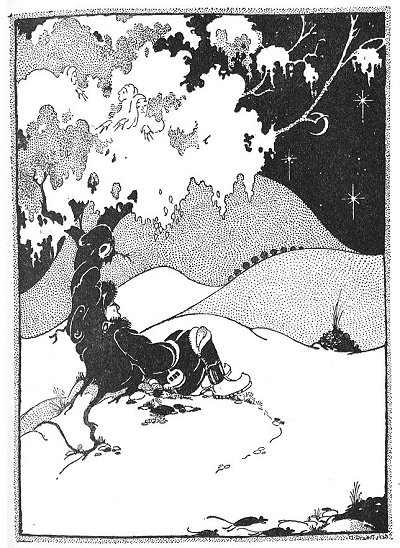
Overview. These Tibetan Folk Tales were collected by Albert Shelton, a doctor and explorer who lived in Tibet for two decades in the early 20th century; he died there in 1922, and his wife published this book in 1925 based on his notes. You will find Buddhist legends here, along with traditional stories of Tibetan gods and goddesses, as well as magicians and wonder-workers. There are stories of ghosts and demons, plus many animal stories, including animal tricksters like the frog who is able to trick a tiger, or the rabbit who is able to trick a lion. There are fairy-tale stories, too, along with stories of human drama, both comical and tragic. Each of the stories is prefaced by a Tibetan proverb, and there are lovely illustrations for many of the stories, as you can see here in the first story when the frog confronts the tiger.

Language. The book is written in contemporary English, so the language used should not pose any problems.

Story Length. These are all single-page stories.

Navigation. You will find the table of contents below, and you can also use this link to see the story posts displayed on two pages total: Tibetan Folk Tales. Click "Older Posts" at the bottom of that page to see the second page.


READING A:
  1. The Tiger and the Frog.
  2. The Cony Who Got into Bad Company.
  3. The Story of the Donkey and the Rock.
  4. How the Fox Fell a Victim to His Own Deceit.
  5. The Ingratitude of Man.
  6. Covetousness.
  7. The Wise Carpenter.
  8. The Story of Drashup and the Goddesses.
  9. The Man and the Ghost.
  10. The Story of the Two Devils.
READING B:
  1. How the Rabbit Killed the Lion.
  2. The Story of the Three Hunters.
  3. How the Raven Saved the Hunter.
  4. The Golden Squash.
  5. The Man with Five Friends with Different Colored Eyes.
  6. The Story of the Violinist.
  7. How the Sacred Duck Got His Yellow Breast.
  8. The Two Little Cats.
  9. How the Wolf, the Fox and the Rabbit Committed a Crime.
  10. A Rabbit Story.
  11. The Man and the Monkeys.


Tibetan Folk Tales: The Tiger and the Frog

The proverbs that Shelton adds to the folktales are sometimes a really close match, and sometimes the connection is very loose. In this case, the proverb fits perfectly: the frog really will go far with the help of the strong tiger!

Explore: For another story about a tricky frog, see How the Sacred Duck Got His Yellow Breast, and for another story about a tiger, see How the Fox Fell a Victim to His Own Deceit.

[notes by LKG]

This story is part of the Tibetan Folktales unit. Story source: Tibetan Folk Tales by A.L. Shelton with illustrations by Mildred Bryant (1925).


The Tiger and the Frog

The tall strong pine is a great help, for with its support the weak vine may climb as high.
Tibetan Proverb.


ONCE upon a time, in the days when the world was young and all animals understood each other's languages, an old, old tiger named Tsuden went out hunting for some food. As he was creeping quietly along the banks of a stream a frog saw him and was badly scared. He thought, "This tiger is coming to eat me up." He climbed up on a little bunch of sod and when the tiger came near, called out, "Hello, where are you going?"

The tiger answered, "I am going up into the forest to hunt something to eat. I haven't had any food for two or three days and I am very weak and hungry. I guess I'll eat you up. You're awfully small, but I can't find anything else. Who are you anyway?"

The frog replied, swelling up as big as he could, "I am the king of the frogs. I can jump any distance and can do anything. Here's a river; let's see who can jump across."

The tiger answered, "All right," and as he crouched ready to jump, the frog slipped up and got hold of the end of his tail with his mouth, and when the tiger jumped he was thrown away up the bank across the river.

After Tsuden got across he turned around and looked and looked into the river for the frog. But as the tiger turned, the frog let loose of his tail and said, "What are you looking for, old tiger, down there?"

The tiger whirled quickly, very much surprised to see the frog away up the bank behind him.

Said the frog, "Now I beat you in that test; let's try another. Suppose we both vomit." The tiger being empty could only throw up a little water, but the frog spit up some tiger hair.

The tiger much astonished asked, "How do you happen to be able to do that?"

The frog replied, "Oh, yesterday I killed a tiger and ate him, and these are just a few of the hairs that aren't yet digested."

The tiger began to think to himself, "He must be very strong. Yesterday he killed and ate a tiger, and now he has jumped farther than I did over the river. Guess I'd better slip away before he eats me." Then he sidled away a little piece, quickly turned and began to run away as fast as he could, up the mountain.

He met a fox coming down who asked, "What's the matter? Why are you running away so fast?"

"Say," the old tiger said, "I met the king of all the frogs, who is very strong. Why, he has been eating tigers and he jumped across the river and landed farther up the bank than I did."

The fox laughed at him and said, "What, are you running away from that little frog? He is nothing at all. I am only a little fox, but I could put my foot on him and kill him."

The tiger answered, "I know what this frog can do, but if you think you can kill him, I'll go back with you. I am afraid you will get frightened and run away, however, so we must tie our tails together."

So they tied their tails fast in a lot of knots and went down to see the frog, who still sat on his piece of sod, looking as important as he could. He saw them coming and called out to the fox, "You're a great fox. You haven't paid your toll to the king to-day nor brought any meat either. Is that a dog you've got tied to your tail and are you bringing him for my dinner?"

Then the tiger was frightened, for he thought the fox was taking him to the king to be eaten. So he turned and ran and ran as fast as he could go, dragging the poor fox with him, and if they are not dead, they are still running to-day.


(700 words)

Tibetan Folk Tales: The Cony Who Got into Bad Company

This is a story about a cony, which is another word for rabbit; it is also spelled coney in English. And yes, that is how "Coney Island" got its name. You will also meet a lama in this story, a spiritual master in Tibetan Buddhism, and you will see that one of the foods he eats is tsamba, roasted barley flour, a typical Tibetan food.

Explore: For another story about a bad rabbit, see A Rabbit Story. For a story about a rat who is much better behaved than this one, see The Ingratitude of Man.

[notes by LKG]

This story is part of the Tibetan Folktales unit. Story source: Tibetan Folk Tales by A.L. Shelton with illustrations by Mildred Bryant (1925).


The Cony Who Got into Bad Company

If you are without kindness, you will meet no kindness in return.
Tibetan Proverb.


(Drawing of a Tibetan lama, circa 1800)

ONCE upon a time, a long, long time ago, when the world was young and new and the mountain tops were all peaks and the garden of Eden had not been pushed up towards the sky by the big high mountains of Central Tibet, men and animals understood each other.

In a desert place, away among the mountains, was a little hut of mud and stone, and in this little hut with its dirt floor dwelt an old lama. His house furnishings were very meager. There was a small piece of beaten felt upon which he slept at night and sat on cross-legged most of the day. He had no clothing and no covering at night except the one gown that he wore. He had some baskets of grain and sacks of tsamba, an earthen-ware pot for tea, and a small wooden bowl from which he ate. He dwelt in this house away from people that he might meditate and pray a good deal, and so acquire holiness. Every day he sat pondering the questions of life, and thinking about the little animals as well.

There was a cony by the name of Susha and a rat by the name of Mukjong. These two were great friends and cronies, and both pretended to be friends with the old lama, but at night when he was asleep for a little while, they would sneak into his hut and steal all the grain they could find.

One day the lama decided that these two were not really his friends, but were just pretending to be, and that they came to see him every day to discover what he had in the hut and then plan to come back at night and steal it. He said, "I'll just set a trap and catch them." So he fixed one of his round baskets into a little drop trap and that night caught them both.

Next morning he found them, cut off their whiskers, ears and tails and turned them loose. They were very angry and said to him, "We belong to the Aberrang, and that is a class that doesn't lie, nor steal nor do any bad or dishonest thing. And you know we are your friends and have not stolen your stuff at all. We just wanted to see what you had in your basket and now see what you've done to us. Well, we're going to our own kings and ask them to send an army to take your grain for sure. So you better make a lot of traps to catch us all when we come."

The rat, very much ashamed of his condition, went to the king and showed him what had been done to him, telling him that he was innocent and asking that his king organize an army and attack the old lama as a punishment for what had been done to him. The king, who was an old man, agreed to do so at once if the king of the conies would aid him. But when he asked the king of the conies he refused to help, as he knew the rat had been guilty.

After the delegation had gone, the king of the conies called the cony to him, who came, looking very much ashamed, and told what had happened to him. The king said, "You only got what you deserved. When you are found in bad company you are judged as guilty as they. The rats are thieves and robbers and have been since the beginning of time, and when you are found with that kind of people you are thought to be just as bad as they. The conies are not a thieving folk, as you well know, and my advice to you is never to be found in the company of the rat or his kind of people again."


(700 words)

Tibetan Folk Tales: The Donkey and the Rock

In this story, the king stages "the trial of the century." I am guessing you will be surprised by the ending; I know I was!

Explore: For another story about crime and justice, see The Man with Five Friends. For a story about a king who is cruel and wicked, unlike this king, see The Story of the Violinist.

[notes by LKG]

This story is part of the Tibetan Folktales unit. Story source: Tibetan Folk Tales by A.L. Shelton with illustrations by Mildred Bryant (1925).


The Story of the Donkey and the Rock

Between iron and brass there is union if the welding is skillful.
Tibetan Proverb.


A VERY long time ago, somewhere in that far away land of Tibet, away up so high that it seems a little nearer the sky than any other land, in one corner was a country governed by a very just man. He was noted in all parts of the dominion for his fair judgment in all cases. In the city where this good king lived and had his home, dwelt two poor men. Both were very good, did the very best they could every day and each had an old mother to support.

One day one of the men started to a village high up in the mountains carrying a jar of oil, selling it as he went. Walking along, he grew very tired and set his jar of oil on a rock by the roadside while he sat down to rest a while. As he sat there, his neighbor came down the mountain driving his donkey in front of him. There were two big loads of wood stacked one on each side of the little donkey, which almost covered him. He didn't happen to see the jar, so came too near and knocked it off, breaking it, and spilling all the oil.

The man who owned the oil was very angry indeed, and the man who owned the donkey said it wasn't he who had done the damage, but the donkey. So they quarreled and quarreled and kept on quarreling. The man who owned the oil said he couldn't afford to lose it, as it was all he had in the world to sell for food for his mother and himself, and it couldn't have been his fault the jar was broken.

They both went to the king who questioned them very carefully about the matter and finally said he couldn't see that either one was to blame. They were both good men, took good care of their old mothers and were honest in all their dealings, and so far as he could see no one was at fault but the donkey and the rock, and he would judge them. So the little donkey was chained with chains around his legs and around his neck and led into prison, while five of the king's men were sent out for the rock. As soon as they brought it in he ordered it wrapped with chains and tied outside the prison door to a post.

By this time the news of this strange case and the queer doings of the king had spread throughout the city. When the people heard their great king was having a trial about a donkey and a rock they thought he had surely gone mad. The next morning the king announced by his runners through the city that the case would be tried. The idea that a donkey and a rock could have a trial in court was more than the people could understand, but early next day everybody in the city was at the courtyard to see the result of the trial.

When the time arrived the judge came, took his seat, instructed the door-keepers to shut and lock all the gates, thus locking in everybody, and then proceeded to pronounce his judgment on the case.

"As you very well know, there is no law by which a donkey and a rock can be judged. Why have you all come to see so absurd a thing? Now, because of your curiosity in the matter, every one of you shall pay a half-cent before he gets out."

The people, looking much ashamed, and glad to get out, handed over this bit of money and slipped through the gate. The cash taken in this way was given to the man who had lost his oil, so he was happy, the debt was paid, and the court closed.


(700 words)

Tibetan Folk Tales: How the Fox Fell a Victim to His Own Deceit

This is a story about a tiger who has two friends: a calf who is a true friend and a fox who is a false friend.

Explore: For another story about a fox who is up to no good, see How the Wolf, the Fox and the Rabbit Committed a Crime. For another story about true and false friends, see The Man with Five Friends.

[notes by LKG]

This story is part of the Tibetan Folktales unit. Story source: Tibetan Folk Tales by A.L. Shelton with illustrations by Mildred Bryant (1925).


How the Fox Fell a Victim to His Own Deceit

Between the official and his people is confidence if the head-man is skillful.
Tibetan Proverb.


ONCE upon a time, away up in the corner of the mountains, in a little cave, lived a tiger and her baby cub. She had brought for this baby, one day when she was out hunting, a little fox to be his playmate. The fox had a happy time and an easy one, for he didn't have to work or hunt, but played all day and the mother tiger kept them all supplied with food.

One day she went out to hunt and found a little calf, which she took home to be another playmate for her son. But the fox was much displeased and became very jealous of the calf because he thought they all loved the calf better than he and that only the food that was left over was given to him. As a matter of fact, they treated him just the same as ever, but his heart was wrong and he began to plan how he might be revenged on the calf.

After a while, the mother tiger became very ill, and as she was about to die she called the calf and her son to her side and said, "Although you are not of the same father and mother, yet you are brothers. I don't want you to ever quarrel, but to live happily here together, and if any one should tell you lies don't pay any attention to them, but always be friends." So saying, she died.

Now the fox saw his opportunity. Every morning the calf was in the habit of running and playing and jumping and shaking his horns in fun, bellowing and taking exercise, while the tiger preferred to lie and rest. So one morning while the calf was skipping around, the fox slipped up to the tiger and said, "Although the calf says he is your friend, have you any idea what he is thinking about, when he runs and jumps and shakes his horns in that manner? In his heart he hates you, and in that manner is gaining strength in order that he may be able to kill you."

This, of course, made the tiger suspicious and very angry. So daily he watched the calf very closely and became sour and surly.

Then the fox went to the calf and said, "You know your mother told you and the tiger that you were to be brothers, but see, he is growing larger and stronger every day and his heart has changed and he is preparing to kill and eat you."

The tiger and the calf were now enemies and watched each other with a great deal of suspicion and were very unhappy. Finally one day the calf said to the tiger, "Why do you want to kill me and eat me? I have done you no harm and love you just as your mother said I should."

The tiger replied, "I love you just the same and never thought of doing such a thing until the fox said you were preparing to kill me."

Then they realized that the fox had been trying to make them enemies, and they decided on a plan to get even with the fox. The tiger said, "I'll tell you what we'll do. We'll have a sham fight saying we hate each other and we're going to fight it out and see who wins. Ask him to be present and while we're in the midst of it, I'll attack him."

The day came and they began their fight. They maneuvered round and round and seemed to be fighting very fiercely until they came very near the fox, when the tiger made a jump, landed on him and killed him and sat down and had a feast of the carcass.

This shows what happens to those who try to make trouble between friends.

(700 words)

Tibetan Folk Tales: The Ingratitude of Man

The key to this story is found in the title: the ingratitude of man. As our hero discovers, animals know how to repay a favor, but man does not. I really like the supernatural elements at the end of the story; you will see that the king calls for his lamas (Tibetan holy men) to explain what is going on.

Explore: Compare these two other stories about ingratitude: How the Raven Saved the Hunter and The Man and the Monkeys.

[notes by LKG]

This story is part of the Tibetan Folktales unit. Story source: Tibetan Folk Tales by A.L. Shelton with illustrations by Mildred Bryant (1925).


The Ingratitude of Man

Whatever you have promised make it not as changeable as a loop in a string, but as firm as a line on a rock.
Tibetan Proverb.


ONCE upon a time in a far, far away land, in a very high, high land, when the old world was very, very young and animals and men spoke and lived together, such a thing as gratitude was known.

Away in the mountains was a narrow road that passed along the side of a deep chasm. It was a dangerous place to travel, and along this path one night, just at dark, when a man, a crow, a rat and a snake were walking along together, a part of the road gave way and they fell into the depths below. They were not hurt, but much shaken, and they sat there waiting and thinking of their plight, wondering how they could get out, or what they could do to keep from starving, when a traveler coming along reached the broken road and looked down and saw them. They all at one time began to clamor and beg to be helped out, so he threw a long rope down to them and drew them all out one after the other.

They all professed great gratitude and said they would never forget him and never forget the help he had given them, and that some time they'd help him. The traveler, in his heart, rather scorned the professions of friendship from the crow, the rat and the snake, and really didn't believe they could do anything for him, but thought possibly the man might be able to aid him some time.

A long time after this had taken place, in the palace of the king, in this far away country, the queen was on the top of the flat roof washing her hair. She took off her jeweled necklace and laid it down near her on a low bench, and when her hair was dry went downstairs and forgot her jewels. Near by in the top of a tree sat the crow who had been rescued by the man a long time ago. He saw the necklace and said, "This will be a good present to give to that man who saved me from the chasm," so he flew down, picked it up in his bill, flew away with it and took it to the man and told him where he got it.

The next day the traveler with the necklace met the man he had rescued and said, "Look here. I didn't think that crow would be much of a friend, but see, he has brought me these magnificent jewels that belong to the queen."

The rescued man, hearing this, went at once to the king and said to him, "The queen's necklace you will find in the house of such a man," and gave the name of his rescuer. The king at once sent his men, arrested the traveler and cast him into prison.

In that dark old dungeon, with no bed to lie on, the walls dripping moisture, no food to eat, and no friend to bring him any, he was about to starve to death, when the rat he had rescued and who lived there came and asked him how he happened to be in that place. He related the story of his arrest and the ingratitude of the man he had saved and said he was about to starve and would surely die unless help came very soon. The rat went away, entered into the king's palace, stole the food from his table, carried it to the man in the dungeon and saved him.

Another day the snake came in to see him and asked how it was that he happened to be in the prison. He told him the story again and the snake said, "Never mind, I'll get you free."

Now this snake was a magic snake and, making himself into a ghost, wound around and around the king's neck and almost choked him to death. He could be felt but not seen. The king wildly called for his great men, his wise men and his lamas who cast lots and told him that this ghost that was choking him was one of the patron saints of the man in the prison, and if he would loose the prisoner and treat him kindly, his troubles would cease. So he called for the prisoner to be brought before him, gave him much money and many jewels and sent him away speedily.

The king's misery stopped and the traveler was made happy by the friendship of the three whom he had doubted and scorned.

Next: Covetousness

(800 words)

Tibetan Folk Tales: Covetousness

This is a "chain" story where one event leads to another. Watch carefully as the characters enter the scene one by one: a bear, a fox, an elephant, and then seven robbers, who split into two groups: one group of three and one group of four. Things do not turn out well for any of them!

Explore: For another story about greed and jealousy, see The Story of the Three Hunters. For another story about a chain of interconnected events, see the tale of The Two Little Cats.

[notes by LKG]

This story is part of the Tibetan Folktales unit. Story source: Tibetan Folk Tales by A.L. Shelton with illustrations by Mildred Bryant (1925).


Covetousness

As hail leads rain, so a quarrel leads relatives apart.
Tibetan Proverb.


LONG ago, hidden in a deep valley in the mountains, was a pool where all the animals went to drink. Near the pool was a road, and across the road a hunter had set a big bow that would shoot a long spear into whatever animal loosed the taut string. A bear coming along tripped over the string, the spear was loosed and it killed him instantly.

A fox came along and said, "Ah, here is enough meat to last me a year, but I guess I had better cut the string that holds the bow, for fear the hunter will return and set it again for me." So he chewed it and the bow sprang, striking him on the head and killing him instantly.

Near the place where the two lay dead was a gully, and in it lay an elephant asleep. A rabbit came along and saw the elephant lying still, played and hopped around, until finally the elephant opened his eyes and watched him. "That's very queer that a little fellow like you can jump so far. I believe I'll try it," he thought. So he gave a big jump and his front feet caught and loosed a big rock that fell on his back and killed him.

All three were dead now, the bear, the fox and the elephant. Then seven robbers came along and exclaimed, "Just look at the meat; we will stay here a few days and eat." But they must have water too, and nobody wanted to carry it. Each wanted the other to go. They finally got three to go and the four who were left said, "We will fix up three nice pieces of meat and put some poison in it for them when they get back, and we four will have all this meat, bones and ivory." So they fixed up the poison meat for the three men who were gone, for they had to go a long way over the mountain after the water.

The three who carried the water said: "Those four fellows are bad men, we are doing all the work carrying this water for them, so we will put some poison in it, then we can have all the meat." When they got back the others were very thirsty and took a big drink, and in a little while they were all dead.

"Now," said the three, "we will have all this meat and stuff ourselves." So the three took meat already cut and ate that, and in a little bit they were dead too.

Now the moral is, "First, people shouldn't be greedy when there is plenty for all (the fox wanted all the meat to eat for a year and tried to ruin the bow and got killed). Second, you mustn't do what you aren't fitted for (the elephant tried to do what the rabbit was doing and got killed). Then the four men begrudged the three and the three begrudged the four, so they all died.

(500 words)

Tibetan Folk Tales: The Wise Carpenter

This is a folktale in which one trickster, the painter, is outdone by an even more clever trickster, the carpenter. As the title of the story promises, the carpenter is indeed the wise one of the two.

Explore: For a story about another wise man, see The Man and the Ghost. For a story about a king who is far more wise than the king in this story, see The Story of the Donkey and the Rock.

[notes by LKG]

This story is part of the Tibetan Folktales unit. Story source: Tibetan Folk Tales by A.L. Shelton with illustrations by Mildred Bryant (1925).


The Wise Carpenter

For men there is no hope, except to find happiness in the worship of the gods.
Tibetan Proverb.

ONCE upon a time in the city which was called Snalong lived a king whose name was Gendong. This king died and his son, Genchog, ruled in his stead. Among the people under him were two men, one a painter, who did exceedingly fine work, the other a carpenter, who was also of the best, and these two men were enemies.

One day the painter came up to the new king and said, "Last night as I was ready to go to sleep, your father sent an angel out of Heaven to call me, and I went to Heaven with him to see what your father wanted and found him rich beyond belief. He gave me a letter to bring to you, and here it is; this letter is about that fine carpenter that dwells here in this city."

The king opened the letter and read: "My son, I am here in Heaven, very wealthy, and I have all that I want except one thing, and that is I wish to build a Hläkäng, or temple, to the gods. But there are no good carpenters here and I want you to send me up the best one in the city. The painter who brings this to you knows all that I mean, for he has been here, and I'm sending the letter by him."

So the king, Genchog, said, "This must be my father's letter, for it is like him to want to build a temple to the gods, and I must see to his wishes at once." So he called the carpenter before him and told him, "My father is in the dwelling of the gods, very happy, but wants to build a Hläkäng and asked me to send you up to help him."

The carpenter thought it queer that such a thing could occur, and said to himself, "It must be a scheme of that painter to get rid of me. I must think of some plan to get ahead of him." Then he said, "Läso [which means so-be-it], but how am I to get there?"

Then the King called the painter and asked him how he was to send the carpenter to his father. The painter said, "This is the way. He is to bring all his tools that he will need up there, put them on a pile on the ground, sit on them, then wood must be piled around him and set on fire. As the smoke goes up, he can ride on it to Heaven."

"Well, that's all right," said the carpenter, "but I want to start from my own field." The king gave him seven days to get ready.

The carpenter went back home to his wife and said, "That painter has fixed a scheme to kill me, and I have only seven days to wait to be burned up, so we must work, for I want a tunnel dug from my house out to the field where the burning is to take place." They got it done and put a few sticks over the opening where he could pile his tools and sit on them.

The king, as soon as the seven days were up, ordered his people to bring several loads of wood, each to carry a load and a bowl of oil. So the wood was piled four square around the carpenter, the oil poured on and set on fire. While the fire was big the carpenter slipped down in the tunnel. The painter exclaimed, "Look, there he goes, riding the smoke to Heaven." They all took it for the truth and went home.

Now, the carpenter had a dark secret room in his house and in there he stayed, washing himself every day and having some clothes made like the gods wear. At the end of three months, putting on these garments, and with skin as white as a lily, he came out of his house and went to see the king, bearing a letter to him from his father.

Thus read the letter, "My dear son Genchog, it is said that you are a good ruler and rule your people wisely and well. Some three months ago you sent me a carpenter to build a Hläkäng, and he has finished it beautifully, and I want you to see that he has his reward on earth when he comes back. Now that the temple is done I want the best painter that you have in the kingdom to come and paint it for me. The same plan that you chose in sending the carpenter will do very well for sending the painter." The carpenter told him how rich his father was and of his adventures in the sky. The king gave him great riches, making him happy for life.

And after reading the letter the king sent for the painter and said, "The carpenter has just come down from Heaven, and has brought a letter asking you to come and paint the Hläkäng for my father."

The painter looking at the carpenter, with his skin so white, dressed in such strange clothes, with strings of coral about his neck, while he was still in his old clothes, thought perhaps that it was all right to go to Heaven that way, and half believed that the carpenter had really been there. So he got all of his things together; as he had been given seven days to prepare, the wood and oil had been brought with some things which the King wished to send to his father.

When all was ready the carpenter said that they must make music for him as he ascended. So they got drums, horns and cymbals, and as the fire started began to beat loudly and made a great noise. As soon as the fire reached the painter, he yelled that he was being burned up, but the noise was so great he couldn't be heard, so he really did go to Heaven.


(1000 words)

Tibetan Folk Tales: Drashup and the Goddesses

This is a story of ineluctable fate. When a man hears a goddess foretell his future, he tries in every possible away to escape what is predicted for him. As you will see, at least in this story there is no escape from fate!

Explore: For other stories with supernatural characters, see The Man and the Ghost and The Story of the Two Devils.

[notes by LKG]

This story is part of the Tibetan Folktales unit. Story source: Tibetan Folk Tales by A.L. Shelton with illustrations by Mildred Bryant (1925).


The Story of Drashup and the Goddesses

In birth and death there is no fear, and in fear there is no doubt.
Tibetan Proverb.


ONCE, long ago, in this land of mystery, where men lived and loved and wondered and died, lived a man named Drashup, who was all alone in the world. All his kin were dead. He had no wife, no children, and he was very, very poor. One day he wandered away upon the mountain and lay down and went to sleep, grieving over his troubles.

Just at this time, in a small village far below at the foot of the mountain, a little girl was born. In the tree under which the man was lying asleep dwelt a goddess. All around him in the wood dwelt a number of goddesses, and it was their duty to cast lots and foretell this new little lady's future: who her husband would be, when she was to be married, if she would live to be old, and the day of her death. The goddess who lived in the tree under which Drashup was sleeping invited all the others to come to her tree, as she had a guest asleep near her dwelling. So they came and began to forecast the lady's future: she would be only middle-aged when she would die from eating the shoulder of a sheep and the man asleep under the tree was to be her husband.

The man was not very sound asleep and overheard all these predictions, which made him very angry, and he said, "Such talk! It is all foolishness. I'm a middle-aged man now and the very idea that I'm to be the husband of a baby just born."

But nevertheless he started out to hunt this child. He traveled and traveled up and down the country, and finally found in the village at the foot of the mountain, a little girl who had been born on that very day, and he knew that it was she about whom they had been speaking. So he slipped quietly up by the side of the house, picked up a small ax used to chop firewood, slipped around where the girl was and struck her. Believing he had killed her he ran away into a far country, but she recovered and grew to womanhood.

By and by the girl's parents died and she was left an orphan with nothing at all, so she left her home and went traveling. By chance she went to the city where Drashup had taken up his residence. They met one day and instantly fell in love. As he was talking to her one time, he saw a big scar on her head and asked her how it came to be there.

"My parents told me that one time a man named Drashup took an ax and tried to kill me, in the village where I was born," she told him. When Drashup heard this, he knew there was no use to try to get away from the words of the future foretold by the goddesses of the mountain, but he didn't tell her how she was to die, though he remembered that, also.

They were married and lived happily, though he was so much older than she. But he was always very careful to take the shoulder of the mutton for himself and see that she never got any of it. She, however, wondered why he always wanted the shoulder for himself, and one day when he was absent from home on business she killed a sheep and said, "As Drashup isn't here I'll eat the shoulder myself." After eating it she remarked, "It was awfully good, no wonder he always wanted it himself." Then suddenly she became violently ill and Drashup found her dead when he came home, and knew for sure that never could any one get away from the decision of the goddesses.

(700 words)

Tibetan Folk Tales: The Man and the Ghost

An important motif in this story is the ghost's fear of barley; the story also mentions tsamba, a typical food of Tibet that is made of roasted barley flour. In the final part of the story, the hero disguises himself as a lama, a Tibetan holy man, and as part of that disguise he carries a "prayer wheel," an important element of Buddhist religious practice in Tibet. You can learn more about Tibetan prayer wheels at Wikipedia.

Explore: For more stories with supernatural characters, see The Story of the Three Hunters and The Story of Drashup and the Goddesses.

[notes by LKG]

This story is part of the Tibetan Folktales unit. Story source: Tibetan Folk Tales by A.L. Shelton with illustrations by Mildred Bryant (1925).


The Man and the Ghost

As you desire the sun, so you desire your friend's return.
Tibetan Proverb.


ONCE upon a time a man was walking along a narrow mountain path, when he met a ghost. The ghost turned around at once and walked along beside him. The man was very much frightened, but didn't care to let the ghost know it. Pretty soon they came to a river which had to be crossed, and as there was no bridge or boat both had to swim it. The man, of course, made a good deal of noise, splashing and paddling the water, while the ghost made none at all.

Said the ghost to the man: "How does it happen that you make so much noise in the water?"

The man answered, "Oh, I am a ghost and have a right to make all the noise I want to."

"Well," the ghost replied, "suppose we two become good friends, and if I can help you I will, and if you can ever aid me you will do so."

The man agreed, and as they walked along the ghost asked him what he feared more than anything else in the world. The man said he wasn't afraid of anything he saw, though inwardly quaking all the while. Then he asked the ghost what he was afraid of. "Of nothing at all," said the ghost, "but the wind as it blows through the tall-headed barley fields."

By and by they came near a city, and the ghost said he was going in to town. But the man said he was tired and that he would lie down and sleep a while in the barley field at the edge of the city. The ghost went on into town and played havoc, as ghosts generally do. He proceeded to steal the soul of the king's son and tying it up in a yak hair sack carried it out to the edge of the barley field where the man lay asleep, and called out to him, "Here is the soul of the king's son in this bag. I'll leave it here for a while and you can take care of it for me, as I have a little business elsewhere."

So saying, he put the sack down and went away. The man now disguised himself as a holy lama, begging tsamba, and, carrying his prayer wheel and the sack, started for the city. When he arrived he heard at once that the king's son was about to die and he knew what was the matter with him. So he went to the palace begging and the king's chamberlain said to him, "You are a very holy man; perhaps you can do something to help the king's son get well." The man said he would try if they would let him in to see the king.

When the king saw him he said, "If you will heal my son, I'll give you half of all I have, lands, gold, cattle and everything." So the man said he would. He took his yak hair sack, sat down on the ground, cross-legged, as all Buddhists sit, made a little idol of tsamba meal, opened the sack and thrust it in, allowing the soul to escape. Then he tied the mouth of the bag with nine knots, blew his breath upon it, said many charms and prayers over it, and while he talked, lo, they brought the king word that the boy was recovering. The father was so pleased and happy, he kept his word and gave the man half of all he possessed. The ghost never, so the story goes, came back or claimed the sack he had left with the man, and the man thought, "Perhaps that is the customary etiquette between a man and a ghost."

(600 words)

Tibetan Folk Tales: The Two Devils

Although this woman and her yak may look nice and friendly, you better watch out. They are both demons in disguise! When the demons start to cause terrible trouble, a fortune-teller is summoned. You will see that he uses tsamba (roasted barley flour) to make a tsamba torma, a pyramid-shaped sculpture that is used in Tibetan rituals. The fortune-teller also uses a rosary, or prayer beads; you can read more about the tradition of Tibetan prayer beads at Wikipedia.

Explore: For more dangerous demons, see The Man and the Monkeys and The Two Little Cats.

[notes by LKG]

This story is part of the Tibetan Folktales unit. Story source: Tibetan Folk Tales by A.L. Shelton with illustrations by Mildred Bryant (1925).


The Story of the Two Devils

The golden eagle flying high you are not able to bind, and great water running swiftly you are not able to dam. 
Tibetan Proverb.


A LONG time ago in a country so high that it would make most boys and girls tired if they tried to run and play, was a great flat table-land entirely surrounded by a forest. On this table-land was located one large city and several smaller ones, all ruled over by a king who had seven sons.

The sons went out in the forest to play one day and found a beautiful girl, who was herding a yak. She told them she was the daughter of the King of the West, that their yak had wandered away and she had come to hunt it. The seven sons thought that she was very pretty to look at, so they proposed to her that she become the wife of the seven, which was the custom of the country.

Now, in reality, the girl was a she-devil and the yak was her husband. They could change their form whenever they chose. She didn't tell the men that the yak was her husband, but drove it away and consented to become the wife of the brothers and went home with them.

Every year one of the sons died, beginning with the eldest, until all were dead except the youngest, and he became very ill and was about to die. The head-men of the villages got together and wondered and wondered what could be done, shaking their heads and muttering that this was a very queer affair, that these six sons, whom they had cared for and to whom they had given all the medicine they knew of, had all died. They thought the matter over and decided to send for a man who they knew could tell fortunes, and see if he could discover what was the matter. Four men were chosen to go and see him.

They traveled until they found him, told him all about the death of the six brothers, and asked him to cast lots and see what was the matter. He told them that he would lie down and sleep and receive a vision on the affair and to-morrow would relate it. Actually he didn't know what in the world to do nor what to say, for he was not a really-truly fortune-teller at all, but only a quack. That night he went to ask his wife what to do, and she said, "You've told a lot of lies about things before this, so it won't hurt you to lie some more. You came out fairly well the other times, so I think that you can fix up a plan for this affair."

The next morning when the four men came, he said, "My vision was fine; I will get out my black clothes and black hat and read prayers for you. We will all go back together and these charms that I read will make everything all right in the palace." So he took a big rosary in one hand and the skull of a hog in the other and traveled along with them.

When they arrived the woman didn't know exactly what to think and wondered if this fellow really did know her and her husband and what they had done. The fortune-teller made a tsamba torma and placed it at the head of the sick man, along with the hog's skull, and covered them both with a cloth. When the she-devil left the room the sick man got a little better and went to sleep. This scared the fortune-teller so badly he didn't know what to do. He thought the man was dying. Really the man's soul had been about half eaten up before the woman left, and when she went away it grew stronger.

The fortune-teller was badly scared and called out two or three times for help and began to think he had better step out and take his things and run off, but the door was locked and he couldn't get it open. He wondered if he could hide some place until he had a chance to slip away, so he sneaked upstairs to the top of the roof and fell through the opening in the dark, astride the yak's horns, and the yak went bucking and tearing away with him on its head.

The she-devil was down there too, because she was afraid. The yak called out, "This man knows us all right, for he lit right on top of my head and knows I am the he-devil, for his charm is in his hand and he is beating me to death with it. What shall I do?"

His wife replied, "He knows me and I dare not come over and help you, and just as sure as can be in the morning he will call all the people together, and they will be planning some scheme to get rid of us." They thought in their hearts that perhaps he would call all the women to carry wood and burn them in the fire, or kill them in some other dreadful way.

"Truly," she said, "to try and find out if we are real they will hit us with rocks to see if it will hurt, and cut us open to see what is inside of us and put us in the fire to see if it will burn us."

The man in the meantime had rolled off the yak and heard all this, so he knew now what to do. Slipping back upstairs he set up his tsamba torma and hog's skull and began to read prayers again. The King's son was awake by this time and the fortune-teller asked him if he wasn't better and he said "Yes."

"Well then," the man said, "in the morning you must call your head-men together, have them tell all the people to bring their guns and swords and some of the women to bring wood."

The next morning they were all there with the wood piled around the center as if for an offering to an idol, as the fortune-teller had commanded them. He asked that his saddle be put on the yak. He donned his black clothes and rode the yak all over the city until he came to the pile of wood. He now grabbed his hog's head and hit the yak three times saying, "I want to see the real body of this yak," and the yak turned at once into a he-devil with a hideous face, two of his upper teeth hanging down to his breast and two lower ones extending up to his forehead. The men standing around killed him with their swords and guns.

Then the fortune-teller called for the woman to come. She came screaming, and he struck her with the hog's skull and she turned into a terrible thing, with a most ugly face, clawlike hands, a great long tongue and teeth like her husband's. The people killed her with rocks and knives and burned them both in the fire; then hastened to do great honor to the fortune-teller, who had gone back to the sick man.

The King's son got well right away and was so pleased he said to the fortune-teller, "Whatever you wish, ask, and I will give you."

"Well," said the fortune-teller, "I would like some of those wooden rings that are used to lead the yak around by their noses." (The reason he wanted them was because his wife always said he couldn't make them properly.) So the son gave him one hundred rings and enough goods to make seven yak loads and he returned to his home.

His wife saw him coming, took some wine and went to meet him. That night she asked him all about his adventures and he told her about the death of the two devils and the recovery of the King's son.

"And is this all you have, some dried cheese and meat and a few rings for the yak?" she said, and scolded him soundly. "To-morrow I will go and see the King's son." But she wrote a letter instead which said, "You have given my husband this little bit of stuff and the nose rings which can have but one meaning, which is that perhaps your disease may return."

When the King's son received the letter he said, "That is all true. I gave him all he asked for, but perhaps I should have given him more." So the next day he went to visit the fortune-teller and said to him, "You have saved my life and done so much for me, now I will make you ruler of half my kingdom." So he made him as powerful as himself.


(1500 words)

Tibetan Folk Tales: How the Rabbit Killed the Lion

In this fable, the lion demands that the other animals kotow (kowtow) to him, kneeling down so low that the head touches the ground. The word is Chinese; you can read more about the ritual of kowtowing in Wikipedia.

Explore: For another story about a rabbit trickster, see A Rabbit Story, and for a real she-devil, see The Story of the Two Devils.

[notes by LKG]

This story is part of the Tibetan Folktales unit. Story source: Tibetan Folk Tales by A.L. Shelton with illustrations by Mildred Bryant (1925).


How the Rabbit Killed the Lion

To your foe do not give a promise, for he carries a sword.
Tibetan Proverb.


A LONG, long time ago, before the mountains were melted, and the trees were burned, and the animals all died, the sun was so hot that the mountains all ran down level with the plains. Then the king of beasts on the earth was the lion, and every morning all the animals had to come and kowtow to him.

One day there was a rabbit in a nice soft bed of grass, feeling so comfortable that he didn't want to go and kowtow to the king. He didn't see any use of it, didn't know exactly where the lion was, and he was having too good a time anyway. All of a sudden the king stood before him looking like a thunder cloud. He spoke and said, "You little split-nosed rascal, here you are having a nice time, eating grass, and have not come to kowtow to me. All the other animals have made obeisance this morning. You do not value your life at all, do you?"

The rabbit thought, "If I don't tell this lion a lot of big lies, he will surely kill me, so I must tell them to save myself." Very politely, he said, "This morning when I got up to go to make my obeisance to you, I came to a stream of water, and in it was a big she-devil and I was afraid, and ran up here a few minutes ago to hide in this grass."

The lion asked, "Did that devil harm you?"

"No," answered the rabbit, "she didn't hurt me, she only yelled as I went by and my heart seemed as if it would break into two pieces, and that was enough for me. She asked, 'You little short-footed fellow, where are you going so fast?' I answered, 'I'm going to make my obeisance to the king of beasts.' Then she said, 'Well, we are going to see about that, son, and find out who is greater, he or I. I've hunted every place for this lion and can't find him, so when you go to kowtow to him, you tell him for me that I want him to come here where I am in this water, and we will see who is to be the ruler of the beasts.' So if you have anything to say to her I'll go take the message, as it would not do for you to go down there."

The lion answered, "I haven't anything to tell you, but I have something to say to that devil, and I'll go down and say it myself. There isn't anything on earth or any devil that can be bigger or think themselves bigger than I am, or more able to rule the beasts, for I'm the biggest there is. If she whips me, I'll be the same as a dog and let her rule."

The rabbit thought, "I'm in for it now; I'll lead him down and let him see for himself." He led him to the stream, and when the lion saw his reflection his hair all bristled up and his tail lashed from side to side. The rabbit, dancing up and down, yelled, "There she is, there she is." Whereupon the lion flew into a great rage, jumped into the water to fight and drowned himself.

(600 words)

Tibetan Folk Tales: The Three Hunters

This is a story of family drama. It begins with three brothers and a sister. The brothers are all married, and the wives of the two older brothers conceive a terrible hatred for that sister, with both shocking and supernatural consequences.

Explore: For more stories of greed and jealousy, see Covetousness and The Golden Squash.

[notes by LKG]

This story is part of the Tibetan Folktales unit. Story source: Tibetan Folk Tales by A.L. Shelton with illustrations by Mildred Bryant (1925).


The Story of the Three Hunters

Be the work good or bad, we cannot tell what may be said of it, nor how far its result may spread.
Tibetan Proverb.


ONCE upon a time, when the world was young and men loved and hated as they do now, in a mountain village there lived three brothers and they were hunters. Each of the brothers had married a wife, and they had one sister who lived with them all.

One day they went out to hunt and brought in a deer. When they had all the meat they wanted to eat they gave a leg bone to the sister, who cracked it, took out the marrow and toasted it, so that it looked very good. As she sat eating this delicacy, the wives of the two elder brothers became very angry, just why it would be difficult to say. They were so angry that they decided they would plan some way to kill the sister. They said, "The brothers think so much of her that they won't consider us at all, so we must get her out of the way."

Again the brothers all went out for a hunt, and the women decided now was the time. The wife of the younger brother would have nothing to do with it and told them it was the wrong thing to do, because the sister had had only her share of the meat. But the wives of the two older brothers decided to kill her anyway.

When the brothers were coming home they stopped on the way to rest and a little bird in a tree kept singing and singing the same tune over and over. Finally one of them said, "That bird seems to want to say something to us; I'm going to see if it does, for it sounds like my sister." He went up to the tree where the little bird sat and said, "If you are my sister, hop up on my hand." The little bird hopped on his hand and they all began to cry, because they knew their sister was dead.

They went on home and found the three wives, but the sister was gone. They said nothing about her being away, but later they found the younger wife crying and she wouldn't tell why. They told her they knew why, as they had seen the sister, and her soul had gone into a bird. So the young wife told them the story, and they were so angry that they killed the two big wives and had the third in partnership.

(400 words)

Tibetan Folk Tales: How the Raven Saved the Hunter

In this folktale, the raven pays a terrible price for the poor man's foolishness! You can find a similar motif of a bird (in this case, an eagle) saving a man from drinking poison in this Aesop's fable: The Snake, The Eagle, and The Farmer.

Explore: Compare these other stories about animal helpers: The Ingratitude of Man and The Man and the Monkeys.

[notes by LKG]

This story is part of the Tibetan Folktales unit. Story source: Tibetan Folk Tales by A.L. Shelton with illustrations by Mildred Bryant (1925).


How the Raven Saved the Hunter 

For a foolish official to speak skillful words is as difficult as for lightning to split a lump of bronze.
Tibetan Proverb.

ONCE upon a time there was a very poor man, with nothing much to eat and very little to wear, who made his living by hunting. One day he went out to hunt and traveled and traveled up hill and down. At last he came to the top of a mountain, hungry, tired and thirsty, as he had had nothing to eat all day. He stood still a few minutes thinking and wondering what he would do.

Looking around he saw a valley far below with a cold stream of water flowing through it. Starting down, he made him a cup of a leaf as he went, came to the stream, dipped his leaf full and started to drink it. Just as he was ready to swallow it a big raven flew by and with his wing struck the cup from his hands. The hunter thought it was an accident, so dipped another drink, when the old raven knocked it from his hand again.

Then he began to be angry at the bird, when he dipped the third time and the raven knocked this out of his hand. He said angrily, "All right, I'll fix you," drew his bow and shot the raven dead.

When the bird was dead the man began to wonder why he didn't want him to drink the water. "Perhaps I had better not drink now, but I'll go to the head of the stream and see where the water comes from." He went a short distance and found that the stream issued from the mouth of a great snake, and looking along the banks he saw many skeletons of birds and animals that had been drinking the water. Then he grieved greatly because he had killed the raven that had tried to save his life.


(300 words)

Tibetan Folk Tales: The Golden Squash

This story is a study in contrasts: the good man's actions and his reward versus the bad man's actions and his punishment. This "king of the lower regions" also makes an appearance in the story of The Violinst.

Explore: For other stories with wicked, scheming villains, see The Wise Carpenter and The Story of the Three Hunters.

[notes by LKG]

This story is part of the Tibetan Folktales unit. Story source: Tibetan Folk Tales by A.L. Shelton with illustrations by Mildred Bryant (1925).


The Golden Squash

The shepherd will protect his flock of sheep and without power can save a hundred lives.
Tibetan Proverb.


ONE time in a corner of the world, high up among the mountains, there lived two old men who were very good friends. Each had a small garden patch. One was a good old man, naturally; that is, he didn't have to try very hard to be good, for his heart was pure, he loved all animals and birds and was very happy in his little garden. But the other old man wanted very much to be wealthy.

One day the first old man found in his garden a little, crippled bird. He took it and cared for it, felt sorry for it, healed it and fed it every day. Then he was able to fly away, and the old man let him go. He soon returned bearing a seed in his mouth which he gave to the old man, saying, "You plant this seed--it's a very fine squash seed, the very finest in the world, and be sure you tend it well."

So the old man planted it and watered it, and at last there grew on the vine just one squash, but it was monstrous big. When cold weather came and it was fully ripe the old man tried to pull it and take it into the house, but he couldn't carry it and had to call five men to help him get it in. By and by he wanted to eat some and peeled off the outer skin, which was very thin like paper, and when he cleaned it, he found it to be solid gold. Now, he was very rich, but he made good use of his money and gave to the poor and aided all who were needy.

His old neighbor came over one day and asked him where he got the seed for that squash, and he told him the story of the little bird. The old man went home, very envious, and thought he would think up a plan so that he would be rich too.

He got his bow and arrow and slipped out into the garden and waited until he saw a little bird light on a tree. Then he deliberately shot, breaking its leg. Picking it up carefully, he pretended to be grieved over its hurt and tended the little thing until it was finally well and able to fly away.

One day sure enough the bird flew back bringing a seed which he told the man how to plant and care for because it was very wonderful indeed. It sprouted and grew and grew until finally when winter came he had to have five or six men help him carry his squash into the house. He was much delighted, for he thought, "Now I shall be rich, too."

He could hardly wait until he could get his knife and cut the skin, but he had no more than broken it when it popped wide open and out jumped a fierce old man, who said he was sent by the king of the lower regions to weigh him. He grabbed him by the back of the neck and set him on the scale which he carried and said, "You are far too light and no use at all," and at once took him out and cut off his head.

So much for the sin of covetousness.

(600 words)

Tibetan Folk Tales: The Man with Five Friends

This is a story about a man who puts his wife to the test, and he also put his five friends to the test as well. Luckily, at least one of those people turns out to be worthy of his trust!

Explore: For other stories about friendship, see The Cony Who Got into Bad Company and How the Fox Fell a Victim to His Own Deceit.

[notes by LKG]

This story is part of the Tibetan Folktales unit. Story source: Tibetan Folk Tales by A.L. Shelton with illustrations by Mildred Bryant (1925).


The Man with Five Friends with Different Colored Eyes

A man who can succeed is always sent; if there is nothing to be done, it doesn't matter who goes.
Tibetan Proverb.

ONE time there was a man who had a son.

The man was not wealthy and hadn't much to leave his son, but he said there were just two things he wanted to tell him before he died: if he heeded them he would be happy; if he didn't he would be very miserable. The two things were these: first, when you are married never trust your wife with your secrets until you have ten children; second: choose your friends by their eyes. "Never choose for a friend a man with a light colored eye," he said; "see that the inner corner of the eye is red and that the white of the eye is pure white and not brownish or yellow, and that the colored part is black. Now, if you will observe these two things you will never get into trouble."

After his father's death he soon married, and as he was a very amiable man, made many friends. It happened that one of his friends had blue eyes, one yellow eyes, another brown eyes, another black, and only one came up to the father's stipulations. He heeded his father's warning about telling his wife his secrets until after his first son was born; then he was so pleased and so happy, he told her what his father had said, but remarked, "I believe you will be trustworthy though, so I will tell you some of my secrets." But he was a bit doubtful still, and resolved to put her to the test.

One night, coming home late, he stopped at a man's place and bargained for a hog for twenty rupees, and the man was to tell nobody to whom he had sold the hog or where it had gone. He took the hog, killed it, drew off his trousers and put the hog in them, threw it over his back and carried it home. When he got there he called his wife in a loud whisper, saying, "Let me in, let me in quick."

"Why, what is the matter?" she asked.

"I've killed a man; let us put him in the pond."

So she helped him and they tied rocks to the trousers and sank it in the water. The man was all covered with blood, carrying the dead pig. He went in and washed himself, taking off his soiled clothes, saying to his wife, "You must never tell this to anybody, for it is as much as my life is worth if you do."

One day he and his wife had a quarrel. "You treat me this way, will you!" she said. "I'll show you what about yourself. You know that man you killed, well, I'll tell the official about it." And she did. He sent an officer to come and get the man and put him in chains until the time should come for his beheading.

The man sent word now to his five friends. All came and listened to his tale, and four of them said, "Well, you did this, you told your wife you did, and you will have to take the consequences, for we can't help you." Then the four left.

His last friend came and after hearing his story said, "This is terrible. I don't know what I can do, but I will save you if I can."

So he went up to the official and told him that his friend had been a very good man and must have been greatly provoked to kill any one, so, if he would spare him, he would give him the man's weight in silver. The official finally consented, had the silver weighed and the man was released. The friend who had helped him was very happy and the man seemed happy too.

The man turned to the official and said, "May I tell you a good story, one of the best you ever heard?" His friends were all standing near and heard him relate what his father had told him before he died, how he resolved to test it, and how his wife at their first disagreement had told on him to the official, and how his friends had all deserted him but the one whose eyes were as his father said they should be.

The official said, "You are one of the wisest men I ever heard of," and sent men to take up the corpse of the pig, proving his tale to be true, and was so pleased with him that he gave him many presents and made him one of the chief men in all his realm.


(800 words)

Tibetan Folk Tales: The Violinist

This story has many elements that might be familiar to you from fairy tales you have read. When our hero takes the daughter of the king of the netherworld away with him, she brings some special objects with her, one of which is "a brass blessing cup" which was used by lamas (Tibetan holy men) to bestow a blessing. She will then use these objects to accomplish some magical feats!

Explore: For more stories with supernatural and magical elements, see The Story of Drashup and the Goddesses and The Golden Squash.

[notes by LKG]

This story is part of the Tibetan Folktales unit. Story source: Tibetan Folk Tales by A.L. Shelton with illustrations by Mildred Bryant (1925).


The Story of the Violinist

When the robber arrives, it is very difficult for the traveler to string his bow and carry tea and wine at the same time.
Tibetan Proverb.

IN a great city, a long time ago, lived a family composed of the father, the mother and three sons. As they grew up and were ready to take up an occupation, the father called them to him and said, "I want you all to go out into the world, each to a different place, and learn a trade." All of them went, and after a year's time came back.

The father said to the oldest, "What have you become?" "Oh, I am a writer," and the father was well pleased, for now he would have some one to keep accounts and look after his business affairs.

To the second one he said, "And what have you learned?" He answered, "I am a carpenter," and again the father was pleased, because he could build their homes and build the homes of other people, and so make much money.

Then turning to the youngest, "And what have you become?" he asked. "Oh, I have learned to play the violin," he answered. "Oh, very good indeed, you have learned a beggar's trade and can stay with me no longer, so you must leave."

So the third son went to a far country, even as far as the shores of the white men, where bounding their country was one black sea. Here he played his violin. In that place dwelt two snakes, a black one and a white one, and one day they began to fight. The black snake was about to kill the white one when the fiddler parted them.

Days went by, when one evening an old white-haired woman came and said to the musician, "The king of the lower regions is greatly indebted to you, as you have saved his son, and if you will go to this lower kingdom the king will give you whatever you want and desire the most."

He said, "I don't know how to go to the lower regions; how do you get there, anyway?"

She told him it was not difficult at all. "But if you will shut your eyes, I will carry you, and you will be there in a little while. When you arrive you ask for whatever you desire most." She told him that the daughter of the king was very beautiful, and because she was so pretty she covered her face and body with the skin of a chicken so she could not be seen.

Then the old woman said, "Don't ask for very much, but tell the king if he will give you a hen you will be satisfied, for if you get the daughter of the king you get a very dear treasure, and obtaining her, you can get anything else you want."

Now the old woman picked him up, he closed his eyes, and soon they arrived at the lower kingdom. The king said, "You saved the life of my son, so I am very much indebted to you. Anything in the world you want, that I will give you."

The violinist replied, "There is nothing I want very much, but there is a hen over there you might give me."

The king answered, "That is all the daughter I have and I love her very much, but I can't say I won't give her to you, for that would be breaking my word. Daughter, you must go, follow this man up into the hills when a lucky day comes, and if there is anything I have that would be of use to you, I will give it to you to take when you go."

The daughter said, "Whatever my father says, that I will do. I would not dare disobey. I do not want to carry much away, but please give me three things. I want a golden pick, a gold chain as long as I can reach from one hand to the other, and a brass blessing cup. Also, I would like a jar of fruit, a lot of feathers, a few of many kinds of hair; these things I will take."

Then these two, the musician and the daughter of the king, on the first lucky day ascended to the earth and went to a city where ruled a very wicked monarch.

Now the wife of the fiddler had great power within herself, and whatever she wanted came to her, so they did not have to do any work at all. One day the musician thought thus in his heart, "We two are very rich now and are second to the king himself in power, and perhaps if this wicked ruler discovers that we are so wealthy he would take all our belongings. I'm going to make a feast to the king, invite him to eat it and see if he so purposes in his heart."

He asked his wife if she thought it would do. "Well," she said, "if you invite the king and give him a feast, when he comes you must be sure to give him the things very quietly, the wine and the good things to eat, but do not be slow in the serving." So the king was invited, and all went well.

As the fiddler was a man who liked to be flattered a bit and who wanted to be very polite to the king, he kept saying, "Stay a bit longer, stay a bit longer." His wife, because it was so hot, as they had had a charcoal fire for a long time cooking the feast, threw off her garment of feathers. It seemed as if the house got brighter when she had done this and the king, seeing how pretty she was, wanted her for his wife, and said to the fiddler, "We are going to trade wives," and took her away with him.

After a few days the king called his chamberlains and head-men from different parts of the province and said, "There is a man here who has given me the daughter of the king of the lower regions for my wife. Now heretofore you have not done much work and what you have done has been very poor. There is a mountain standing over on that side of the country and you are to level it even with the plain, making all the land equal in height." His servants all answered, "If you will demand another thing we will do it, but this we are not able to do. Suppose you call the former husband of this woman and tell him what is required."

So he called the musician and said, "Can you do this?" He answered, "Yes," without thinking, "I can make this level for you." When his wife heard him say this, she waited for him near the stairs, and when he came she said to him, "You know the gold pick I brought with me that my father gave us. You take that and strike the mountain three times on three sides and it will disappear."

The king and his stolen wife went out to see it done, and lo, as he struck the third time the mountain sank and a pond stood in its place.

When the king saw his work he said, "Well, if you can do this you can do a bit more. Where this pond is, make a big lake. On the borders I want the finest of trees bearing luscious fruit, full of singing birds and many animals in among the trees."

The violinist did not know how in the world he could accomplish all this, but thought he would slip around and ask his former wife how to do it. She said, "Take that blessing cup and pour some water from it into the pond and it will become a lake. Take seeds from the fruit we brought and plant on the edge of the lake, and fruit-bearing trees will come. Take some of the feathers and throw them among the branches of the trees and birds will spring forth. Then throw the hair among the bushes on the ground and animals will be there."

He went to the king and said, "I have accomplished what you asked me."

The king was much pleased, but now he said to him, "You and your wife have the power to show me hell, and would you please to do it." The violinist pondered the question and said, "Give me some time to think about it," but really he wanted to ask his wife what to do.

So when she got the chance she said to him, "You know that golden chain we brought from my father. Well, you take that and drag it up and down the mountain a few times and the door will open and the king can see hell. It looks like a mighty fine place but it is a very terrible place to go to. You do that, and when you have fixed it so that it can be seen, you tell him you want to give it to him as a gift. Make smaller chains of the golden chain you have to fasten the door and keep it open."

Then they took the king to see this fine place, and he and his servants passed through the iron door to see the beautiful temple. Then the fiddler jerked the chains loose and shut the door so that the king and all his people fell into hell. So the fiddler got his wife back again and they ruled the kingdom forever afterwards.


(1600 words)