Showing posts with label native2. Show all posts

Myth-Folklore Unit: Blackfoot Stories

Overview. In these tales from Grinnell's Blackfeet Indian Stories, you will read about the epic adventures of Kut-O-Yis, a divine avenger born from the blood of the buffalo who battled many monsters. You will also read about Napi, or "Old Man," the supernatural trickster and culture hero of the Blackfoot people, and also about "Cold Maker," who brings the winter to the northern Plains. You will meet the "Wolf Man" who went to live with the wolves because he was angry at his wives, and you will also read about two men who loved their wives very much — one who went to the camp of ghosts to bring her back from the land of the dead, while the other bravely rescued his wife after she had been kidnapped by the Thunder god (he got some help from Raven along the way). There are also animal stories about bears, bobcats, buffalo, and prairie dogs, too, to name just a few.

Language. Grinnell's book draws on Blackfoot sources, but they have been edited to a more or less literary style which should not be too hard to read.

Story Length. The stories in this unit are single-page stories, along with a five-page-long cycle of stories about the great hero Kut-O-Yis, "Blood Boy."

Navigation. You will find the table of contents below, and you can also use this link to see the story posts displayed on two pages total: Blackfoot Stories. Click "Older Posts" at the bottom of that page to see the second page.


READING A:
  1. Two Fast Runners
  2. The Wolf Man
  3. The Dog And The Root Digger
  4. The Camp Of The Ghosts
  5. The Buffalo Stone
  6. How The Thunder Pipe Came
  7. Cold Maker's Medicine
  8. The Rolling Rock
  9. Bear and Bullberries
  10. The Theft from the Sun
READING B:
  1. The Smart Woman Chief
  2. Bobcat and Birch Tree
  3. The Red-Eyed Duck
  4. Kut-O-Yis, The Blood Boy
  5. Kut-O-Yis, The Blood Boy (cont.)
  6. Kut-O-Yis, The Blood Boy (cont. again)
  7. Kut-O-Yis, The Blood Boy (cont. yet again)
  8. Kut-O-Yis, The Blood Boy (end)


Myth-Folklore Unit: Apache Tales

Overview. These stories from Jicarilla Apache of New Mexico, collected and translated by P. E. Goddard, feature many tales of Coyote, who is both a trickster and also a benefactor of mankind as the bringer of fire. There are other animal stories, too, such as the tale of how Mole managed to beat Coyote and the other animals in a race. You will read a whole series of stories about the great culture-hero Naiyenesgani who battled monsters like the Giant Elk and the water monster who had devoured the Taos Indians. There are other hero legends, too, such as the story of the man who climbed up Panther's tail into the Sky world, or the man who rescued the buffalo who had all been stolen by Raven, thus restoring the buffalo to the people.

Language. Goddard's book contains English translations of traditional Apache tales. If you are looking for a more authentic reading experience, this unit is probably the closest option to the original oral style of the stories.

Story Length. These are all single-page stories.

Navigation. You will find the table of contents below, and you can also use this link to see the story posts displayed on two pages total: Apache Tales. Click "Older Posts" at the bottom of that page to see the second page.


READING A:
  1. The Emergence
  2. The First War
  3. The Culture Heroes and Owl
  4. The Killing of the Monsters
  5. Naiyenesgani Rescues the Taos Indians
  6. More Deeds of Naiyenesgani
  7. Naiyenesgani Takes His Leave
  8. Coyote Secures Fire
  9. The Swallowing Monster
  10. The Man Who Helped the Eagles
  11. Releasing the Buffalo
  12. The Origin of Corn and Deer
READING B:
  1. The Supernatural Person in the Lake
  2. The Man Who Traveled with the Buffalo
  3. Coyote Steals a Man's Wife
  4. Coyote Takes Arrows from Owl
  5. Antelopes Take Arrows from Coyote
  6. Coyote Tries to Make His Children Spotted
  7. Coyote and Porcupine
  8. Coyote Kills the Prairie Dogs
  9. Coyote and His Hosts
  10. Coyote and Mosquito Marry Under False Pretenses
  11. Coyote and the Mexicans
  12. Coyote and the Animals Run Races

(Jicarilla Apache man,
photo by E. Curtis, 1904)


Myth-Folklore Unit: Sioux Legends

Overview. The legends in this unit come from books by two Sioux authors, both women, writing in the early years of the 20th century: Marie McLaughlin (Myths and Legends of the Sioux) and Zitkala-Sa (Old Indian Legends). Many of the stories are about the trickster figure and culture-hero called "Spider," Iktomi (Unktomi, Ictinike), and there are also stories about the trickster Rabbit along with some Turtle tales, including a version of the famous "turtle on the warpath" legend. You will also find stories here about the Sioux people and their life on the Plains, including encounters with the spirit world, like the legend of the tribe that discovered a mysterious cave with petroglyphs on its walls that revealed the future.

Language. This unit contains stories from two different authors: McLaughlin's stories (in the first half of the unit) are closer to the oral tradition, while the stories by Zitkala-Sa (in the second half of the unit) are more literary in style.

Story Length. These are all single-page stories.

Navigation. You will find the table of contents below, and you can also use this link to see the story posts displayed on two pages total: Sioux Legends. Click "Older Posts" at the bottom of that page to see the second page.


Table of Contents:

Free audiobook available:

READING A:
  1. The Rabbit and the Grouse Girls
  2. The Rabbit and the Bear
  3. The Story of the Lost Wife
  4. The Simpleton's Wisdom
  5. A Little Brave and the Medicine Woman
  6. The Boy and the Turtles
  7. The Hermit, or The Gift of Corn
  8. The Mysterious Butte
  9. The Wonderful Turtle
READING B:
  1. The Pemmican Man and Unktomi
  2. Unktomi, The Two Widows, and the Red Plums
  3. Unktomi and the Arrowheads
  4. Iktomi and the Ducks (with audio)
  5. Iktomi's Blanket (with audio)
  6. Iktomi and the Muskrat (with audio)
  7. Iktomi and the Coyote (with audio)
  8. Iktomi and the Turtle (with audio)
  9. The War-Like Seven (with audio)

Myth-Folklore Unit: Myths of the Cherokee

Overview. In these stories from Myths of the Cherokee by James Mooney you will meet Rabbit, a sly and dangerous trickster, and also Terrapin, another formidable trickster figure. There are other animal stories too, such as the ball game between the birds led by Eagle and the animals led by Bear. You will also read the Cherokee stories of creation in which Dâyuni'sï, the water-beetle, builds the earth, and Amai'yëhï, the water-spider, brings the fire. Other stories tell about the origin of the spots on the moon and the stars in the sky, where strawberries come from, and why possum's tail is bare. There are also legends of the supernatural snake-monster called Uktena and the Ulûñsû'tî, the blazing jewel in its forehead which bestows wondrous powers on anyone who possesses.

Language. Mooney's stories are close in style to the oral Cherokee stories, so this unit, along with the Apache unit and the Eskimo (Inuit), would be a good option to choose if you want to read stories that have the feel of the original oral tradition.

Story Length. These are all single-page stories.

Navigation. You will find the table of contents below, and you can also use this link to see the story posts displayed on two pages total: Cherokee Myths. Click "Older Posts" at the bottom of that page to see the second page.


READING A:
  1. How the World Was Made
  2. The First Fire
  3. The Journey to the Sunrise
  4. Origin of the Pleiades and the Pine
  5. The Moon and the Thunders
  6. The Deluge
  7. Tobacco and Strawberries
  8. The Rabbit Goes Duck Hunting
  9. How the Rabbit Stole the Otter's Coat
  10. Why the Possum's Tail Is Bare
  11. How the Terrapin Beat the Rabbit
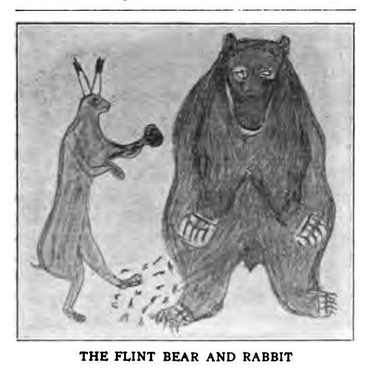
  12. Flint Visits the Rabbit
  13. The Deer and the Rabbit
READING B:
  1. The Terrapin's Escape from the Wolves
  2. The Ball Game of the Birds and Animals
  3. The Race Between the Crane and the Hummingbird
  4. The Owl Gets Married
  5. The Huhu Gets Married
  6. The Uktena and the Ulûñsû'tï
  7. Âgän-uni'tsï's Search For the Uktena
  8. The Red Man and the Uktena
  9. The Hunter and the Uksu'hï
  10. The Ustû'tlï
  11. The Snake Boy / The Snake Man
  12. The Rattlesnake's Vengeance
  13. The Bullfrog Lover

Myth-Folklore Unit: Tejas Legends

Overview. These stories from When the Storm God Rides: Tejas and Other Indian Legends were collected in Texas in the early years of the 20th century. Many of the stories come from the Tejas Indians, a Caddoan people of eastern Texas whose name, meaning "friend," is where Texas itself got its name. There are also stories that traveled north from the Maya of the Yucatan or which come from neighboring peoples such as the Comanche. The stories were selected and re-told with a young audience in mind, emphasizing positive lessons drawn from the world of nature: how the woodpeckers tap the trees as they look for their lost children, why the oriole nests in the pecan tree, and what made the roadrunner become the bitter enemy of the rattlesnake, along with many other nature tales.

Language. These stories are told in a very charming and simple style, specifically intended for a young audience. If you are interested in children's literature and learning how to tell stories for children, this is a good option to choose!

Story Length. These are all single-page stories.

Navigation. You will find the table of contents below, and you can also use this link to see the story posts displayed on two pages total: Tejas Legends. Click "Older Posts" at the bottom of that page to see the second page.


READING A:
  1. When the Storm God Rides
  2. How the North Wind Lost His Hair
  3. The Plant That Grows in Trees
  4. Why the Woodpecker Pecks
  5. The Woodpecker's Stumpy Tail
  6. Old Woolly Bird's Sacrifice
  7. A Tribe That Left Its Shoes
  8. The Cloud That Was Lost
  9. The Swift Blue One
  10. Grandmother River's Trick
READING B:
  1. Why Hummingbirds Drink Only Dew
  2. The Maiden Who Loved a Star
  3. Old Quanah's Gift
  4. How Sickness Entered the World
  5. Why the Irises Hold Hands
  6. The Pecan Tree's Best Friend
  7. When the Rainbow Was Torn
  8. Paisano, Hater of the Rattlesnake
  9. Maidens Who Broke a Drought
  10. The Cottonwood Remembers
  11. Why the Dog's Ears Flop


Myth-Folklore Unit: Eskimo Folk Tales

Overview. These Canadian Inuit stories were recorded by the polar explorer Knud Rasmussen (whose mother was Inuit) in the early years of the 20th century; his Inuit name was Kunúnguaq. Rasmussen grew up in Greenland among the Kalaallit Inuit speaking the Kalaallisut language, and he spent his life investigating the origin and culture of the Inuit peoples. He published many books about his expeditions and research; Eskimo Folk-Tales was published in 1921, and it contains illustrations by Inuit artists. You will read here about the shamans and their adventures in the spirit world, including encounters with the tupilak (zombies), man-eaters, and ghosts. There are stories of family drama, too, along with animal tales and the Inuit creation story about how the world began.

Language. Rasmussen reports these stories in a style quite close to the original oral style, not quite as extreme as the Apache stories, but close to it. If you want to read stories that are close to the original oral storytelling tradition, this unit and the Apache unit are two good choices. The names are quite unusual, but as the names do not recur from story to story, that should not be a big problem for any given story.

Story Length. These are all single-page stories.

Navigation. You will find the table of contents below, and you can also use this link to see the story posts displayed on two pages total: Eskimo Folk Tales. Click "Older Posts" at the bottom of that page to see the second page.


READING A:
  1. The Coming of Men, A Long, Long While Ago
  2. Nukúnguasik, who Escaped from the Tupilak
  3. The Woman Who Had a Bear as a Foster-Son
  4. Qalagánguasê, Who Passed to the Land of Ghosts
  5. Isigâligârssik
  6. The Insects that Wooed a Wifeless Man
  7. Makíte
  8. Atungait, Who Went A-Wandering
  9. The Giant Dog
READING B:
  1. Papik, Who Killed His Wife's Brother
  2. Pâtussorssuaq, Who Killed His Uncle
  3. The Wife Who Lied
  4. The Eagle and the Whale
  5. Atdlarneq, The Great Glutton
  6. Ángángŭjuk
  7. Âtârssuaq
  8. Tungujuluk and Saunikoq
  9. Kánagssuaq


Myth-Folklore Unit: The Song of Hiawatha

Overview. This unit contains the first half of The Song of Hiawatha, an epic poem by Henry Wadsworth Longfellow that was published in 1855. Although Longfellow named his hero "Hiawatha," the poem is actually based on the adventures of the Ojibwa culture-hero Manabozho who figures prominently in the Great Lakes unit for this class and also in the Canadian unit. Longfellow's poem begins with Hiawatha's childhood and his dramatic confrontation with his father Mudjekeewis, the West Wind. You will then learn how Hiawatha discovered corn, how he defeated his rival Pearl-Feather, and finally how he courted and married Minnehaha. The unusual meter of the poem (called trochaic tetrameter: DA-duh DA-duh DA-duh DA-duh) was inspired by Longfellow's reading of the Finnish epic Kalevala, which forms part of the European module for this class later in the semester.

Language. This poem by Longfellow is one of the classics of American 19th-century poetry. If you are interested in learning about the connections between American literature and Native American storytelling traditions, this is the unit you should read!

Story Length. This is one continuous story, although it is divided up into separate episodes which recur one after another. What you will be reading here is one half of the complete poem, leading up to the marriage of Hiawatha and Minnehaha.

Navigation. You will find the table of contents below, and you can also use this link to see the story posts displayed on two pages total: Hiawatha. Click "Older Posts" at the bottom of that page to see the second page.


READING A:
  1. The Four Winds
  2. The Four Winds (cont.)
  3. Hiawatha's Childhood
  4. Hiawatha and Mudjekeewis
  5. Hiawatha and Mudjekeewis (cont.)
  6. Hiawatha's Fasting
  7. Hiawatha's Fasting (cont.)
  8. Hiawatha's Friends
  9. Hiawatha's Sailing
  10. Hiawatha's Fishing
READING B:
  1. Hiawatha and the Pearl-Feather
  2. Hiawatha and the Pearl-Feather (cont.)
  3. Hiawatha's Wooing
  4. Hiawatha's Wooing (cont.)
  5. Hiawatha's Wedding-Feast
  6. The Son of the Evening Star
  7. The Son of the Evening Star (cont.)


Myth-Folklore Unit: American Indian Fairy Tales

Overview. This children's book - American Indian Fairy Tales - contains stories inspired by the Ojibwa and other Native American legends collected and published by Henry Schoolcraft in the early 19th century. Schoolcraft's publications were also the main source for Longfellow's Hiawatha, and some of the stories in this book ("Shin-Ge-Bis Fools the North Wind" and "Child of the Evening Star") also appear in Longfellow's poem. Larned has set up the stories in a frame-tale format with a storyteller named Iagoo (who also appears as a character in Hiawatha) who entertains the children of his tribe by sharing these stories with them. There is a free audiobook available, so you too can let Iagoo tell you the stories if you want, listening to these legends along with Morning Glory and the other children in Iagoo's audience.

Language. While this book is not intended for very young readers (as the Tejas Legends are), it is a book written for a young audience in a literary style, covering in prose many of the same stories conveyed in the verse of Longfellow's Hiawatha. 

Story Length. These are medium-length stories, mostly two or three pages in length, with one story that is four pages long.

Navigation. You will find the table of contents below, and you can also use this link to see the story posts displayed on two pages total: American Indian Fairy Tales. Click "Older Posts" at the bottom of that page to see the second page.


READING A:
  1. Iagoo, the Story-Teller
  2. Shin-ge-bis Fools the North Wind
  3. Shin-ge-bis Fools the North Wind (cont.)
  4. The Little Boy and Girl in the Clouds
  5. The Little Boy and Girl in the Clouds (cont.)
  6. The Child of the Evening Star
  7. The Child of the Evening Star (cont.)
  8. The Child of the Evening Star (cont. again)
  9. The Child of the Evening Star (end)
READING B:
  1. The Boy who Snared the Sun
  2. The Boy who Snared the Sun (cont.)
  3. The Boy who Snared the Sun (end)
  4. How the Summer Came
  5. How the Summer Came (cont.)
  6. How the Summer Came (end)
  7. The Fairy Bride
  8. The Fairy Bride (cont.)